

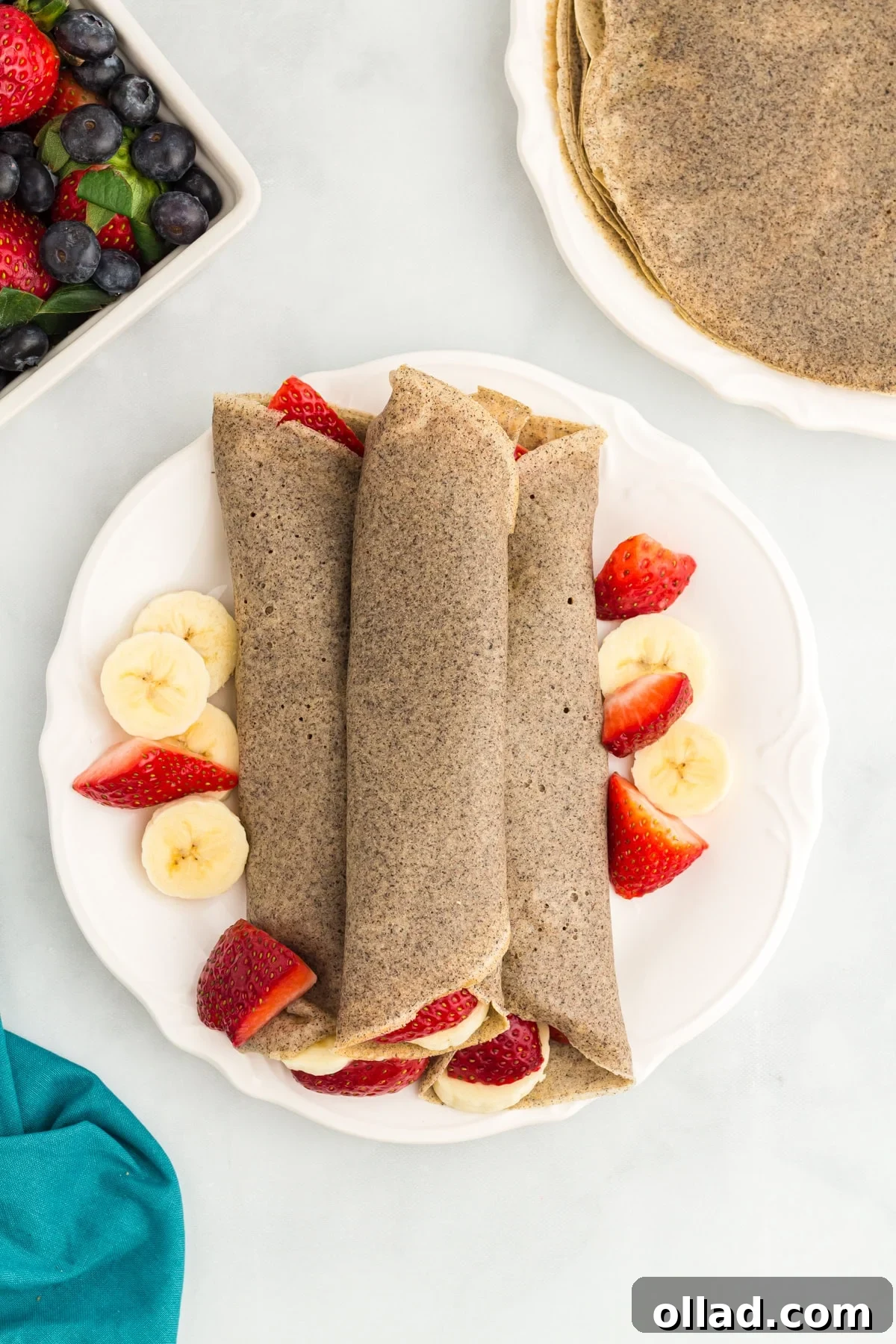
Once, the delightful experience of indulging in authentic French crepes seemed like a distant memory, particularly for those on a gluten-free diet. However, a delicious discovery changed everything: buckwheat crepes, known as galettes in their native Brittany region of France, are inherently gluten-free. These rustic, beautifully lacy pancakes offer a savory or sweet culinary journey, and the best part? They are incredibly simple to prepare at home using just four basic ingredients and a blender. In under 30 minutes, you can effortlessly flip, fill, and savor a genuine taste of France, right from your kitchen table.
Easy Buckwheat Crepes Recipe: An Authentic Gluten-Free Delight
While classic gluten-free crepes hold a special place in my heart, the distinctive charm of buckwheat flour elevates these French pancakes to another level. Buckwheat crepes, often called galettes de sarrasin in French, are renowned for their light, delicate, and uniquely lacy texture. What truly sets them apart is their subtle, earthy, and nutty flavor profile, which I find utterly irresistible. This recipe proudly uses 100% buckwheat flour, ensuring that these crepes remain naturally gluten-free without the need for any added gums or starches that can sometimes alter texture or taste. A generous splash of milk is key to achieving a silky-smooth, pourable batter, guaranteeing the perfect consistency for effortlessly thin crepes. Their incredible versatility means they can be transformed with virtually any savory or sweet filling imaginable, making them suitable for any meal of the day.
The Origins of Buckwheat Crepes: A Breton Tradition
To truly appreciate buckwheat crepes, it’s worth delving into their rich history. These culinary delights are not just a gluten-free alternative; they are a staple of Breton cuisine from the northwest region of France. Buckwheat, or sarrasin, thrived in Brittany’s poor soil where wheat struggled, making it a cornerstone of the local diet for centuries. Historically, galettes were a hearty, peasant food, often served with simple, savory fillings like ham, cheese, and eggs. They were a nutritious and filling meal for farmers and fishermen. The thin, crispy edges and tender center of a perfectly made galette are a testament to this enduring tradition, bringing a piece of French heritage right to your plate.
Why Buckwheat? More Than Just Gluten-Free
Beyond its gluten-free nature, buckwheat offers a host of nutritional benefits that make these crepes a wholesome choice. Despite its name, buckwheat is not a type of wheat but a pseudocereal, related to rhubarb and sorrel. It’s a complete protein, meaning it contains all nine essential amino acids, which is rare for a plant-based food. It’s also an excellent source of dietary fiber, helping with digestion and promoting satiety. Rich in minerals like magnesium, manganese, copper, and phosphorus, and a good source of B vitamins, buckwheat contributes to overall health and well-being. Its distinct flavor also adds depth and character to the crepes that traditional wheat flour simply cannot replicate, making them a unique and flavorful option.
Gluten-Free Crepe Making: Tips for Perfection
- Achieving a Smooth Batter: The key to delicate crepes is a smooth, lump-free batter. If you find your batter has lumps after blending, don’t hesitate to blend it for a bit longer until it reaches a perfectly smooth consistency. For an extra assurance of silkiness, you can also pass the batter through a fine-mesh strainer to catch any stubborn bits.
- Adjusting Batter Thickness: Crepe batter should be thin enough to spread easily but thick enough to hold together. If your batter feels too thick, preventing it from swirling evenly in the pan, gradually add 1-2 tablespoons more milk (or your chosen dairy-free alternative) until you achieve a thin, pourable consistency. It should coat the back of a spoon lightly.
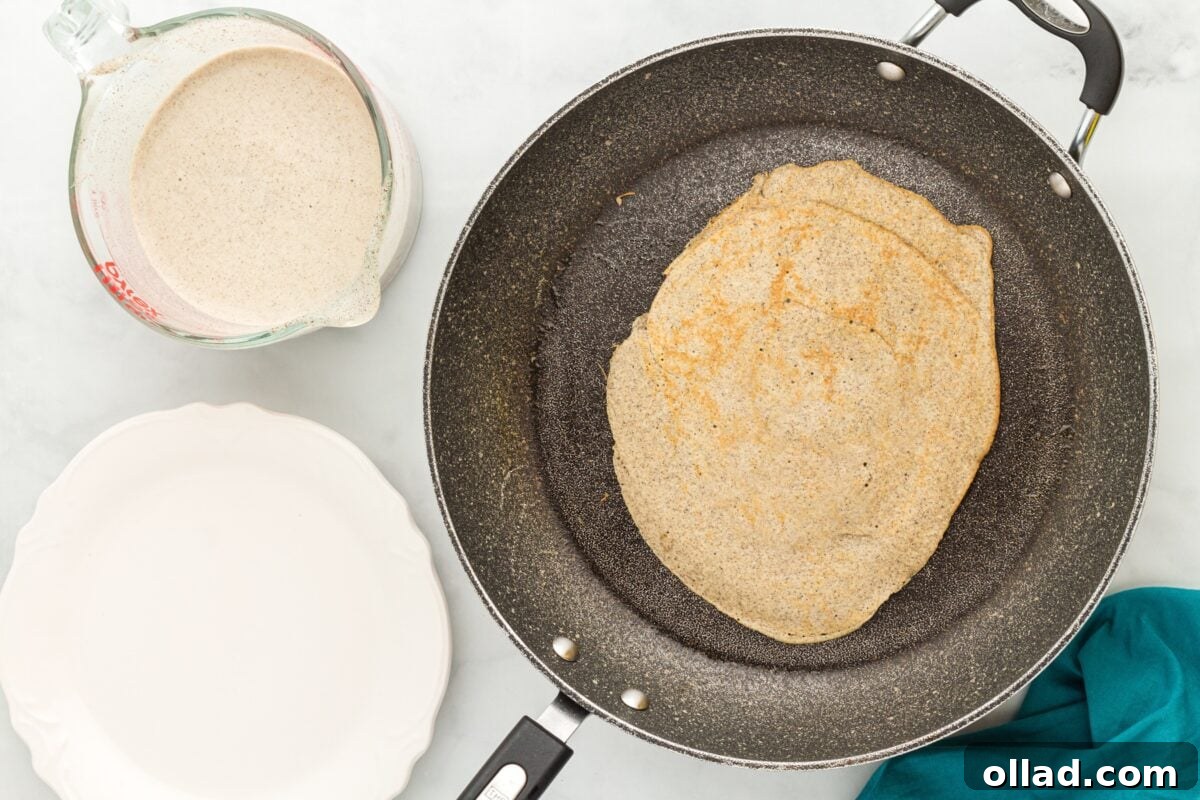
- Knowing When to Flip: Timing is crucial for perfectly cooked crepes. Look for the edges of the crepe to appear dry and start lifting slightly from the pan. The surface of the crepe should no longer look shiny, indicating it’s mostly set. When you gently shake the pan, the crepe should slide easily. If you’re still unsure, carefully lift an edge with a spatula; if the underside is a light golden brown, it’s ready for its flip.
- Preventing Sticking: Even with a non-stick pan, a light spray of non-stick cooking oil between each crepe is highly recommended. This ensures that every crepe effortlessly releases from the pan, leading to beautifully formed results.
- Resting the Batter: While this recipe is quick, allowing the batter to rest for 10-15 minutes (or even up to an hour in the fridge) can further improve the texture of your crepes. This allows the buckwheat flour to fully hydrate, resulting in a more pliable and less likely-to-tear crepe.
Buckwheat Crepes
Servings: 10 crepes
Cook: 20 mins
Total: 25 mins
Pin Recipe
Share by Email
Print Recipe
These rustic buckwheat crepes are surprisingly easy to make at home with just 4 simple ingredients and a blender. In less than 30 minutes, you’ll be flipping, filling, and savoring a little taste of France at your own table.
Equipment
- 1 non-stick skillet or crepe maker
- High-powered blender
- Silicone spatula
- Measuring cups and spoons
Ingredients
- 2 cups milk (For dairy-free, use almond, oat, or soy milk)
- 1 ¼ cups buckwheat flour (185 grams)
- 4 large eggs
- ½ teaspoon salt
- Non-stick cooking spray
Instructions
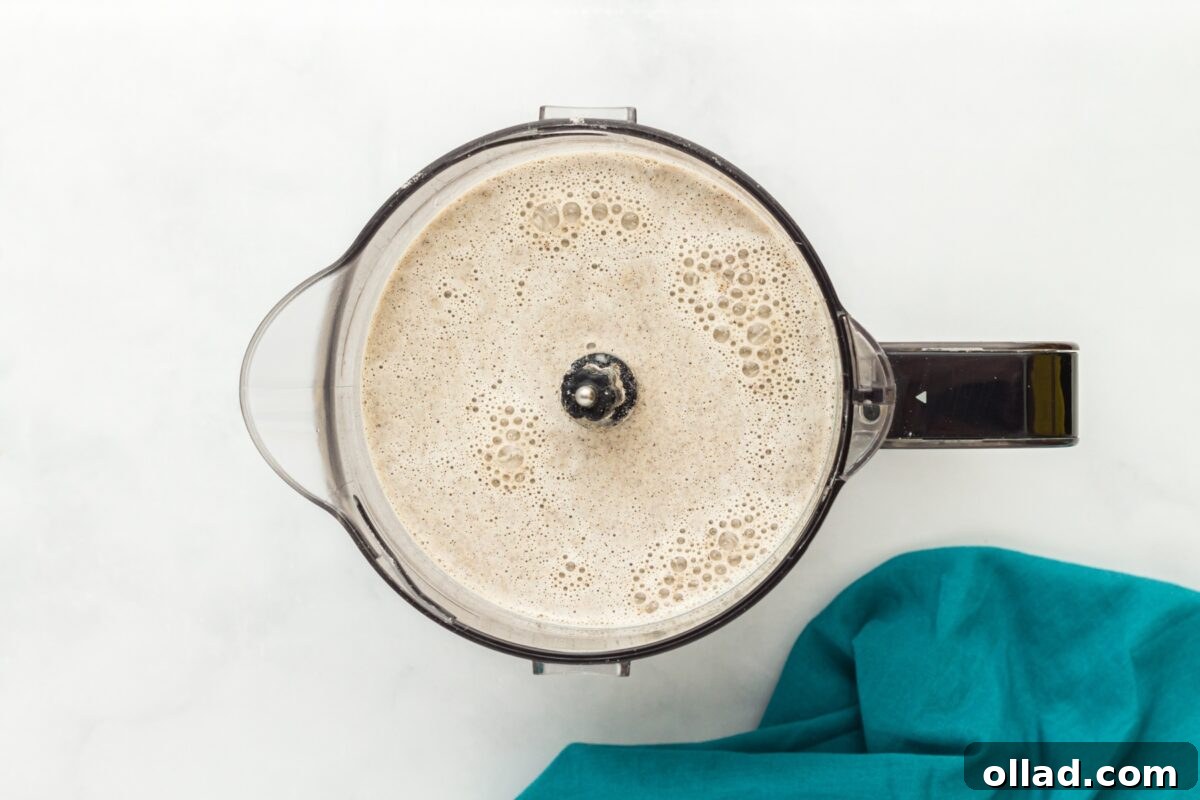
- Prepare the Batter: Place the milk, buckwheat flour, eggs, and salt into a high-powered blender. Blend on high speed until the mixture is completely smooth, typically about 30 seconds.
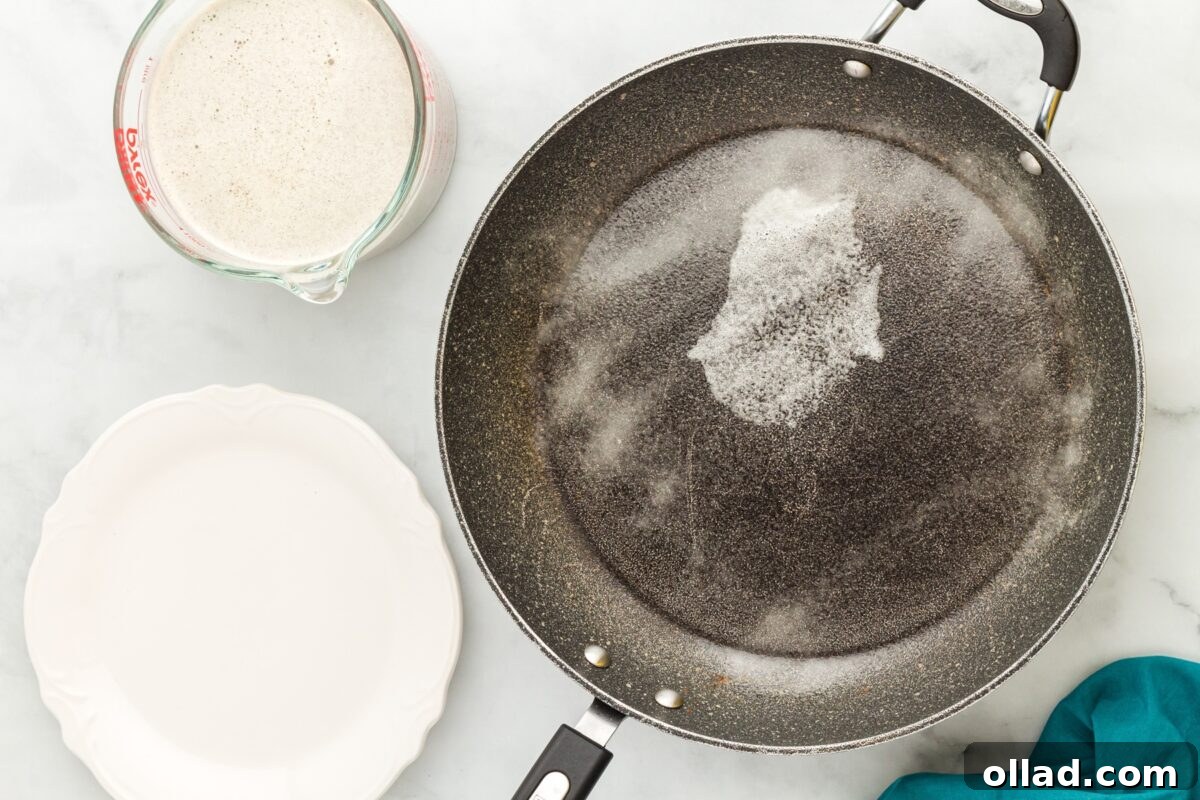
- Preheat Your Cooking Surface: Heat a 10-inch frying pan over medium-high heat, or preheat your crepe maker according to its instructions. If using a crepe maker, refer to the specific crepe maker steps below.
- Prepare the Frying Pan (if applicable): Just before pouring the batter into the frying pan, lightly spray the pan with non-stick cooking spray. It’s crucial to reapply this spray between each crepe to prevent sticking and ensure easy flipping.
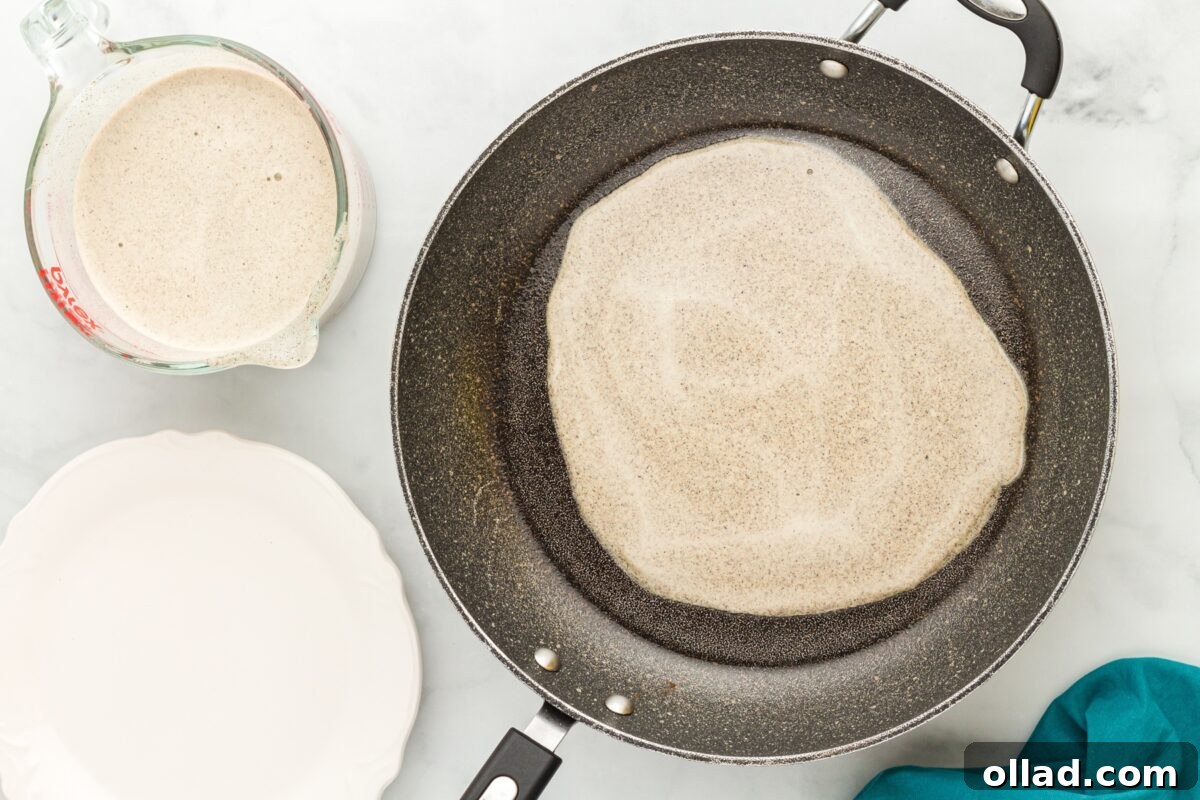
- Pour and Swirl the Batter: Lift the frying pan off the heat and tilt it towards you. While tilted, begin pouring approximately 1/3 cup of batter into the pan, rotating the pan quickly to allow the batter to spread evenly into a thin, circular layer, about 8 inches in diameter. Work swiftly, as the batter will start cooking immediately upon contact with the hot surface.
- Cook the First Side: Place the frying pan back onto the heat and cook for 1 to 2 minutes. You’ll know it’s ready when the edges appear set and begin to lift slightly from the pan.
- Flip and Finish: Using a thin silicone spatula, gently slide it under the crepe and carefully flip it to cook the other side. Cook for another 1 to 2 minutes, or until the crepe is fully set and lightly golden.
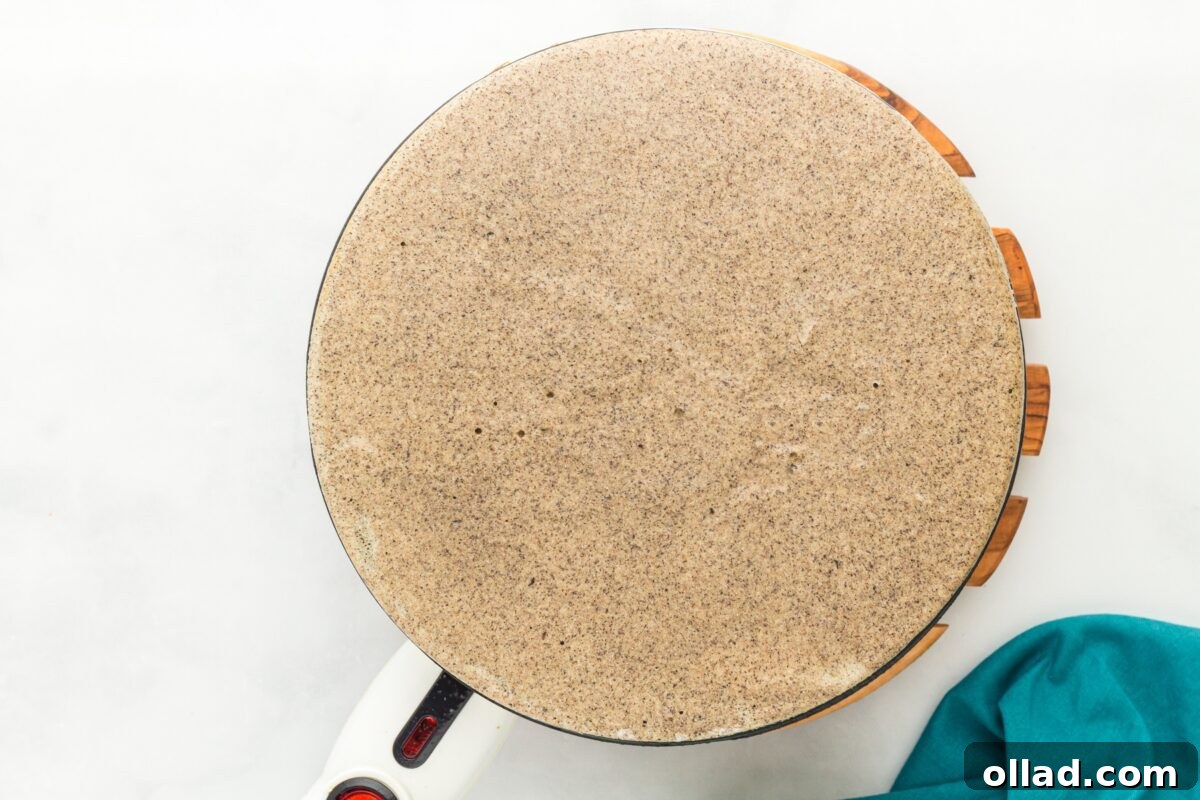
- Crepe Maker Method: If you are using a crepe maker, follow the specific directions provided with your appliance. Crepe makers typically produce much thinner crepes compared to a frying pan, which is often the preferred method for authentic, delicate crepes. Be aware that thinner crepes are more fragile, so handle them carefully with a rubber spatula when removing them.
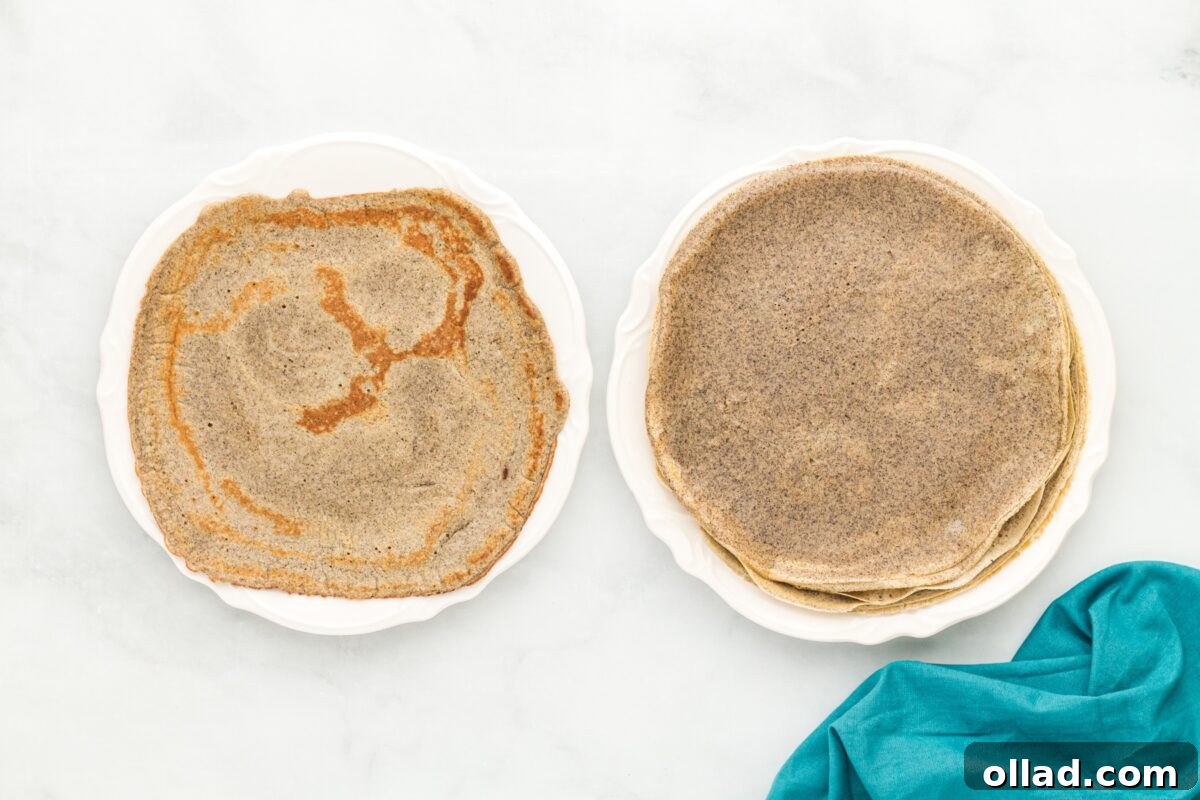
- Continue Cooking: Place the cooked crepe on a plate and repeat the steps above with the remaining batter until all crepes are made. Stack them gently on a plate or platter.
- Serve Immediately: Serve the crepes warm with your desired sweet or savory fillings.
Notes
- Use approximately ⅓ cup of batter per crepe to achieve an 8-inch diameter.
- For best results, allow your batter to rest for at least 10 minutes before cooking. This allows the flour to absorb the liquid fully, resulting in a more consistent and pliable crepe.
- Experiment with different dairy-free milks like almond, oat, or soy to find your favorite flavor profile.
Nutrition
Calories: 105 kcal
Carbohydrates: 13g
Protein: 6g
Fat: 4g
Saturated Fat: 2g
Polyunsaturated Fat: 1g
Monounsaturated Fat: 1g
Trans Fat: 0.01g
Cholesterol: 71mg
Sodium: 161mg
Potassium: 184mg
Fiber: 2g
Sugar: 3g
Vitamin A: 174IU
Calcium: 76mg
Iron: 1mg
Nutrition information is automatically calculated and should be used as an approximation only.
Additional Info
Cuisine: French
How to Make Buckwheat Crepes: A Step-by-Step Visual Guide

Serving Suggestions: Endless Possibilities for Buckwheat Crepes
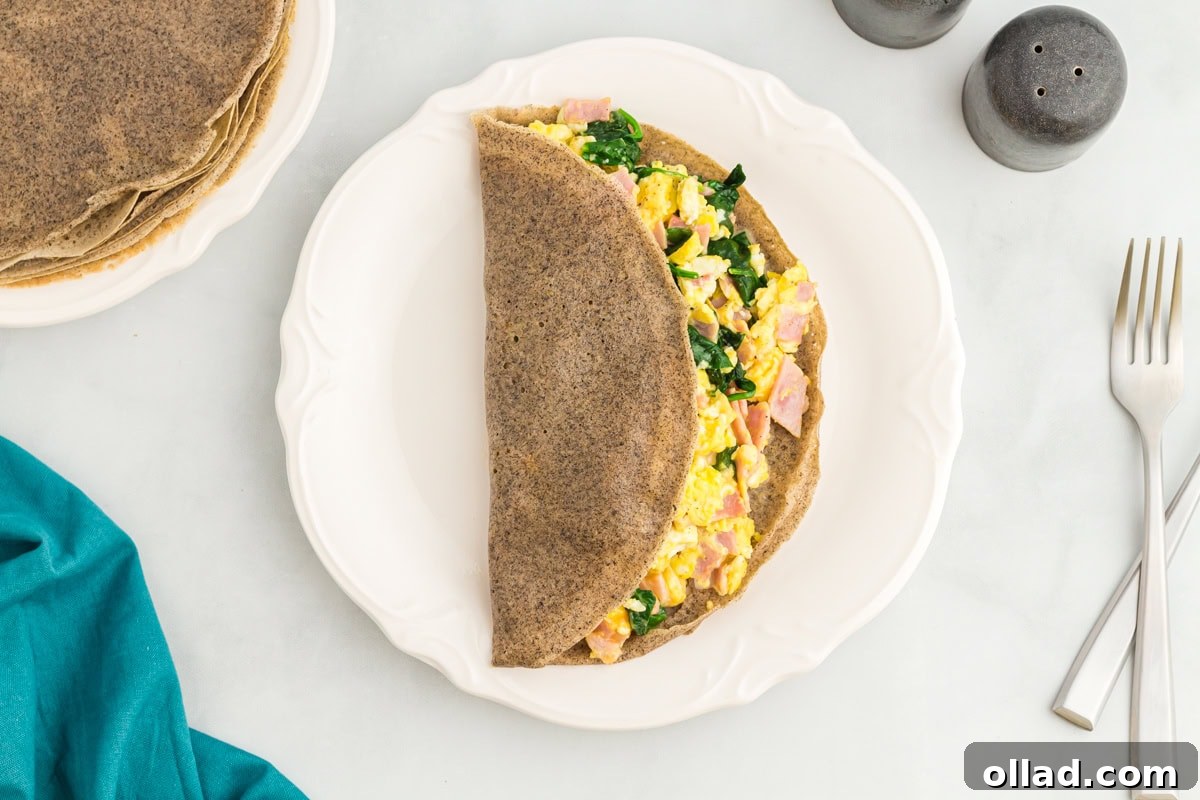
The true beauty of these buckwheat crepes, much like their classic French counterparts, lies in their incredible versatility. They serve as a perfect canvas for both sweet and savory creations, making them suitable for any meal or craving. For a hearty and satisfying breakfast or brunch, I absolutely adore them filled with a quick, fluffy omelet, perhaps with some herbs and cheese. To embrace a classic French experience, fill your galettes with thinly sliced ham and gooey, melted Gruyère cheese, perhaps topped with a fried egg for the traditional “galette complète.” If your palate leans towards something sweet, a generous slather of creamy Nutella is always a winner, especially when paired with an abundance of fresh fruits like sliced bananas, juicy strawberries, or ripe raspberries. A dusting of powdered sugar and a squeeze of lemon juice also make for a delightfully simple yet elegant sweet treat. These crepes are truly wonderful at any time of day, whether you’re beginning your morning with a flavorful start, enjoying a light and satisfying lunch, or treating yourself to a cozy, indulgent dessert after dinner.
Sweet Filling Ideas:
- Nutella and banana slices
- Fresh berries (strawberries, blueberries, raspberries) with whipped cream
- Lemon juice and a sprinkle of granulated sugar
- Apple compote with cinnamon
- Maple syrup and a dash of vanilla extract
- Ricotta cheese with honey and chopped nuts
- Melted chocolate and marshmallows
Savory Filling Ideas:
- Ham, Gruyère cheese, and a fried egg (the classic Galette Complète)
- Sautéed mushrooms and spinach with goat cheese
- Smoked salmon, cream cheese, and fresh dill
- Roasted chicken and asparagus with a light béchamel sauce
- Caramelized onions and crumbled feta cheese
- Spicy sausage and bell peppers
- Leftover slow-cooked pulled pork or beef with a tangy sauce
Storage Instructions: Make Ahead and Enjoy Later
One of the many advantages of these buckwheat crepes is how well they store, making them an excellent option for meal prepping or entertaining. I often prepare a larger batch ahead of time, knowing I’ll have delicious crepes ready to go when hunger strikes. Cooked crepes can be stored in the refrigerator for up to 3 days. To prevent them from sticking together, simply stack them with a piece of parchment paper or wax paper in between each crepe. Place the stack in an airtight container or a large zip-top bag to maintain freshness.
For even greater convenience, the batter itself can be made 1 day in advance. Prepare the batter as directed, then cover the blender carafe or transfer it to an airtight container and refrigerate. Before using, give the batter a good whisk or re-blend briefly to ensure it’s smooth and well-combined, as the flour can settle at the bottom.
Buckwheat crepes also freeze exceptionally well, extending their shelf life for up to 2 months. To freeze, allow the cooked crepes to cool completely. Stack them with parchment paper in between each one, then wrap the stack tightly in plastic wrap and place it in a freezer-safe bag or container. When you’re ready to enjoy them, simply reheat the crepes. You can warm them gently in the microwave for 15-30 seconds per crepe, or for a crispier edge, reheat them in a lightly oiled skillet over medium heat for about 30-60 seconds per side until warmed through and pliable. This make-ahead capability ensures you’re never far from a delightful French-inspired meal.
More Buckwheat Flour Recipes to Explore
If you’ve fallen in love with the unique flavor and gluten-free benefits of buckwheat flour, there’s a whole world of culinary possibilities waiting for you to discover. Buckwheat is incredibly versatile and can be used in a variety of delicious recipes, both sweet and savory. Expand your gluten-free baking repertoire with these fantastic buckwheat-based dishes:
- Hearty Buckwheat Bread: A dense and flavorful loaf that’s perfect for sandwiches or toasting.
- Fluffy Buckwheat Pancakes: Start your day with these wholesome and satisfying pancakes, a delightful alternative to traditional recipes.
- Buckwheat Noodles (Soba): Explore Japanese cuisine by incorporating soba noodles into your stir-fries or cold noodle salads.
- Buckwheat Groats: Use cooked groats as a nutritious side dish, a breakfast porridge, or an addition to salads for extra texture and protein.
Embrace the unique qualities of buckwheat and enjoy a world of naturally gluten-free culinary adventures!