
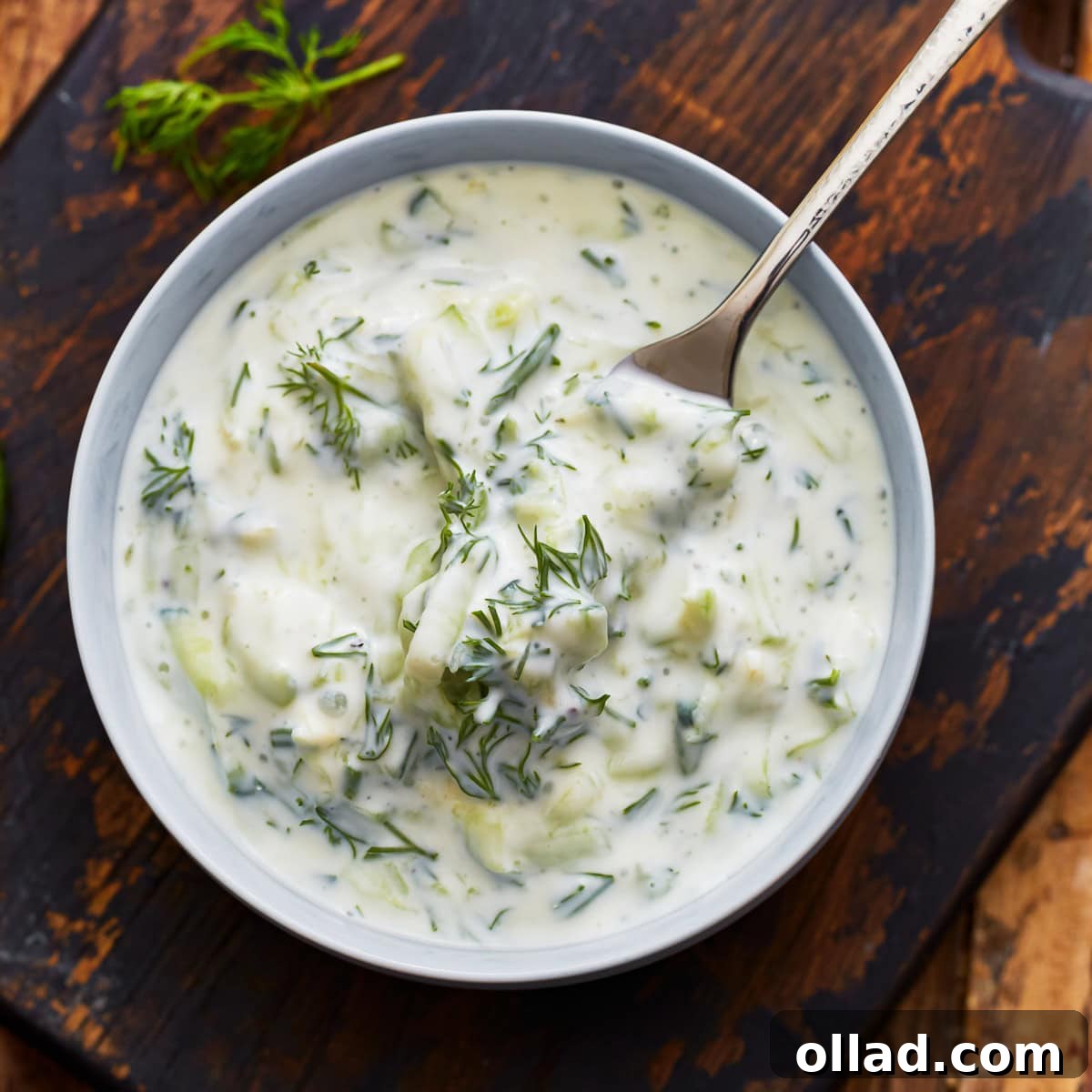
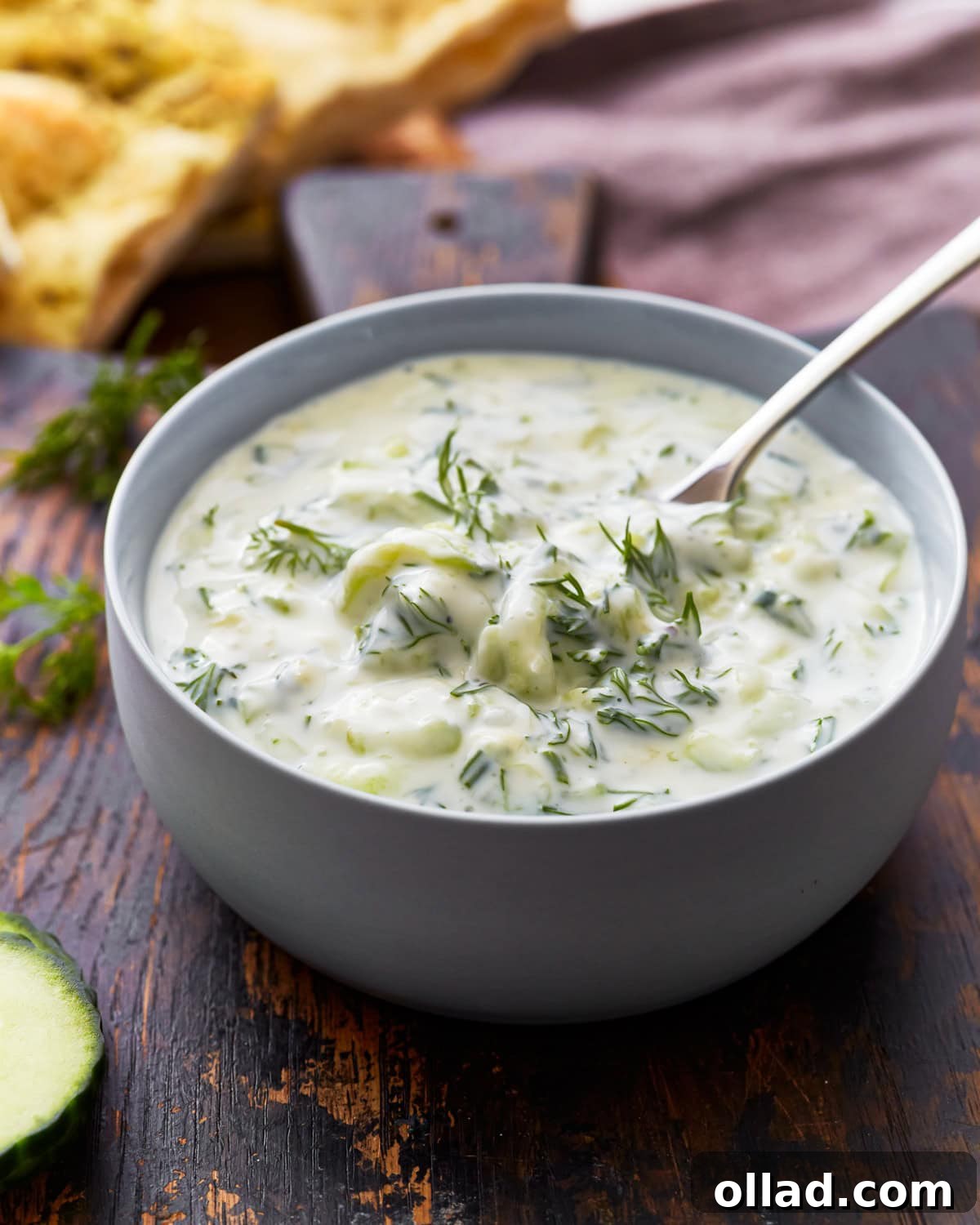
Embark on a culinary journey to the Mediterranean with this irresistible dairy-free tzatziki recipe, a fresh and flavorful dip that rivals its traditional counterpart. This easy-to-make sauce is not only exquisitely delicious but also caters to various dietary needs, being naturally gluten-free, vegan, and low-carb. Crafted from tangy plant-based yogurt and brimming with vibrant, readily available ingredients, it’s a refreshing addition to any meal or gathering. Whether you’re seeking a light snack, a vibrant party dip, or a versatile condiment to enhance your favorite dishes, this dairy-free tzatziki promises to be your new kitchen obsession. Drizzle it over roasted vegetables, spread it in sandwiches, or even use it as a creamy salad dressing – its versatility knows no bounds.
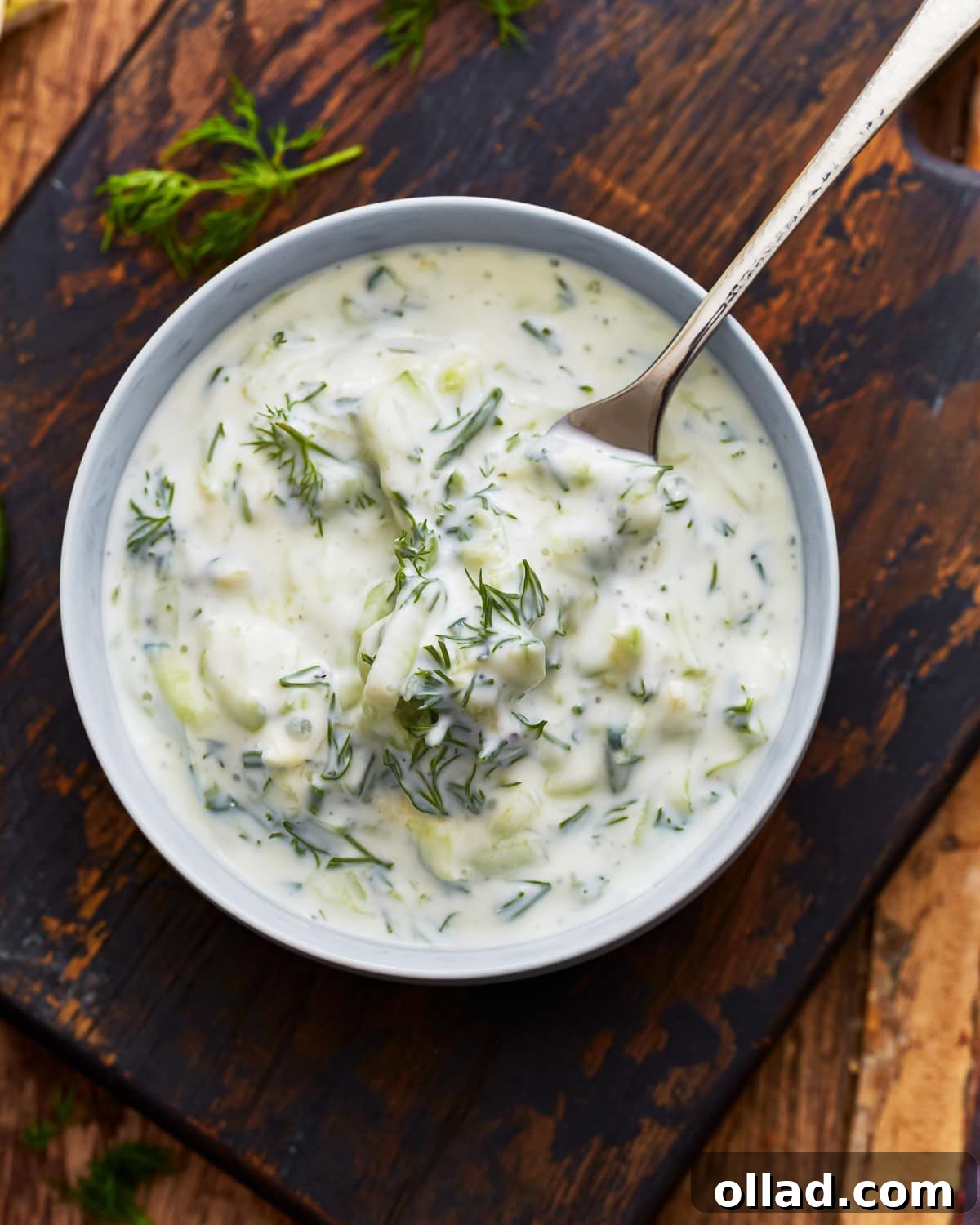
Discover the Delight of Dairy-Free Tzatziki
Tzatziki, a beloved Greek sauce or dip, is traditionally crafted from yogurt, fresh cucumber, aromatic garlic, a splash of lemon juice, and a generous amount of fresh dill. It’s a staple in Mediterranean cuisine, celebrated for its cooling properties and zesty flavor profile. Our innovative version elevates this classic by replacing conventional Greek yogurt with a high-quality vegan alternative, making it completely dairy-free without sacrificing a shred of its authentic taste or creamy texture. You might even find, as my family did, that it’s so remarkably similar to the original, they won’t even realize it’s plant-based until you tell them!
What is Tzatziki? A Brief History
The origins of tzatziki can be traced back to the Ottoman Empire, where similar yogurt-based dishes were common. It evolved into the refreshing dip we know today in Greece, becoming an integral part of their culinary heritage. Traditionally made with sheep or goat’s milk yogurt, it was designed to complement rich meats and spicy dishes, providing a cooling contrast. Its simple yet powerful combination of ingredients has made it a global favorite, synonymous with healthy and flavorful Mediterranean eating.
Why Choose Dairy-Free?
Opting for a dairy-free lifestyle offers numerous benefits, whether due to allergies, lactose intolerance, ethical considerations, or personal preference. This dairy-free tzatziki recipe allows everyone to enjoy the refreshing taste of this classic dip without compromise. By using plant-based yogurt, we open up this incredible flavor experience to vegans, those with dairy sensitivities, and anyone looking to incorporate more plant-based options into their diet. It’s a delicious way to enjoy familiar flavors while exploring new, health-conscious culinary paths.
Crafting Your Perfect Dairy-Free Tzatziki: Essential Ingredients
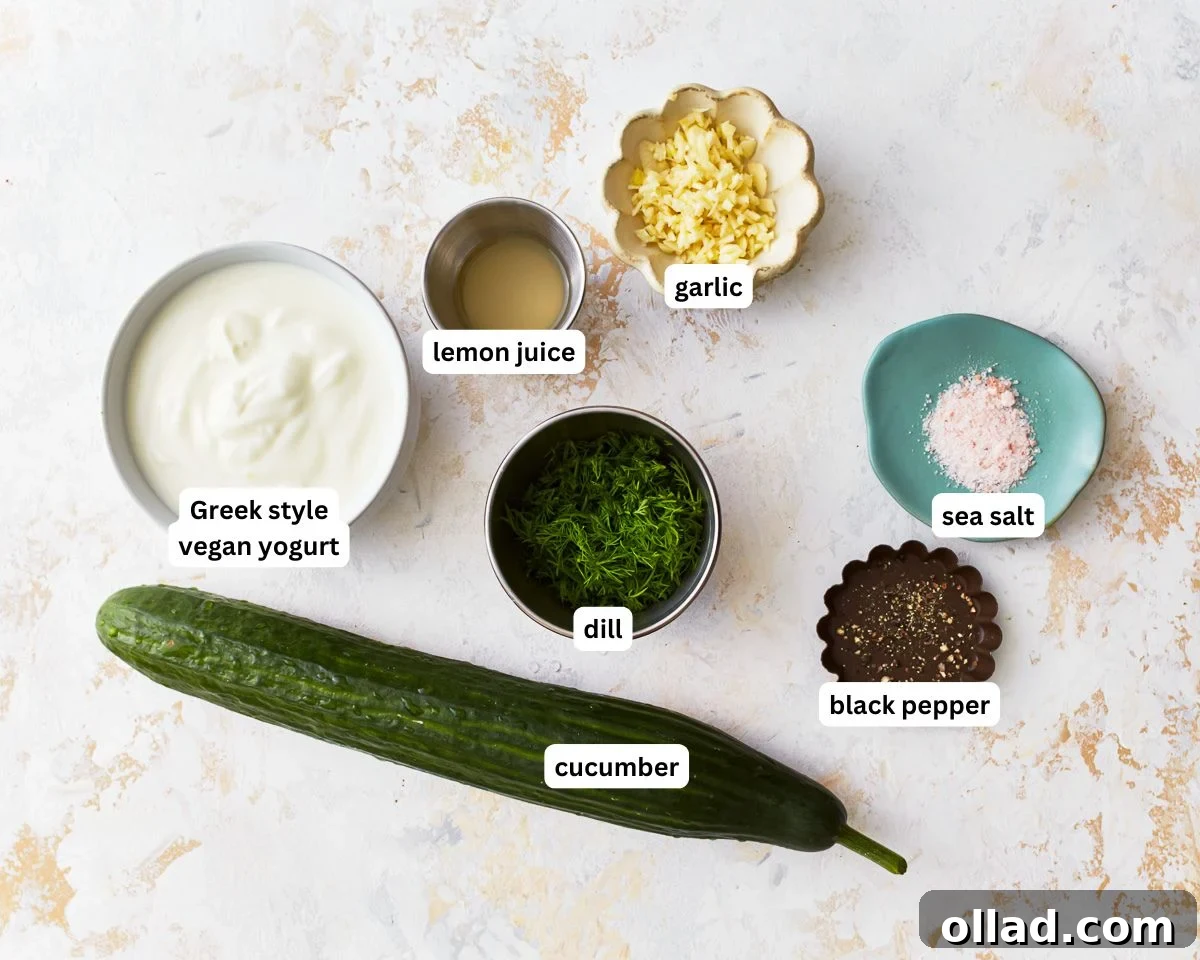
The magic of this dairy-free tzatziki lies in the careful selection and preparation of a few simple, fresh ingredients. Each component plays a crucial role in building the layered flavors and achieving the perfect texture for this iconic Mediterranean dip.
- Cucumber: For the best results, opt for a large English cucumber. These varieties are typically less seedy and have thinner skins, reducing the need for extensive peeling. You’ll only need about two-thirds of a large cucumber for this recipe, leaving the remainder perfect for snacking or adding to salads.
- Greek-style Vegan Yogurt: This is the cornerstone of our dairy-free tzatziki. Select a plant-based yogurt that is thick, creamy, and distinctively tangy. Almond or coconut milk-based yogurts are excellent choices, providing a neutral base that allows other flavors to shine. Crucially, ensure your chosen yogurt is plain and unsweetened, free from any added sugars or artificial flavors that could alter the dip’s authentic taste. If you’re not strictly dairy-free, traditional Greek yogurt can be used as a direct substitute.
- Garlic: Fresh garlic is absolutely indispensable for that signature pungent and savory kick. We recommend two cloves, finely minced, but feel free to adjust this quantity based on your personal preference for garlic intensity. Freshly minced garlic provides a much more vibrant flavor than powdered alternatives.
- Lemon Juice: A squeeze of fresh or bottled lemon juice is vital for brightening the flavors and enhancing the tangy profile of your dairy-free tzatziki sauce. It adds a refreshing zing that perfectly complements the richness of the yogurt and the freshness of the cucumber.
- Fresh Dill: This herb imparts a wonderfully bright, herbaceous, and slightly anise-like flavor that is characteristic of traditional tzatziki. While fresh dill is highly recommended for its vibrant aroma and taste, you can substitute it with approximately ½ a tablespoon of dried dill if fresh is unavailable. Although you could omit it, dill is often considered the soul of tzatziki, so its inclusion is highly encouraged for an authentic experience.
- Salt and Black Pepper: Never underestimate the power of proper seasoning. A thoughtful measure of sea salt and freshly ground black pepper is crucial for harmonizing and amplifying the flavors of all the other ingredients, bringing them together into a cohesive and delightful dip.
Expert Tips for the Best Dairy-Free Tzatziki
Achieving the perfect consistency and flavor for your dairy-free tzatziki is simple with a few helpful techniques. These tips will ensure your dip is thick, creamy, and bursting with fresh taste, just like the classic version.
-
Mastering Cucumber Preparation
Cucumbers are notoriously high in water content, which can lead to a thin, watery tzatziki if not properly addressed. Therefore, do not skip the crucial step of draining the cucumber. After grating or thinly slicing your cucumber, transfer it to a clean cheesecloth or several layers of paper towel. Tightly wrap and squeeze out as much liquid as humanly possible. This vital step will prevent your dip from becoming diluted and help maintain its desired creamy texture. Don’t discard the nutrient-rich cucumber juice; it can be a refreshing addition to smoothies or mixed with water for a hydrating drink.
-
Achieving the Ideal Yogurt Consistency
Vegan yogurts often tend to be runnier than their dairy counterparts. To achieve a thicker, more traditional tzatziki consistency, seek out the densest Greek-style vegan yogurt available. If your chosen yogurt is still too thin, you can easily thicken it by straining it. Line a fine-mesh sieve with cheesecloth and place it over a bowl. Pour the vegan yogurt into the cheesecloth and let it sit in the refrigerator for a few hours, or even overnight. This process will allow excess liquid to drain, leaving you with a wonderfully thick and rich yogurt base.
-
Customizing Flavors and Textures
For those who prefer a more substantial dip with visible pieces of cucumber, consider dicing the cucumber instead of grating it. This creates a delightful chunky texture that adds another dimension to the tzatziki. When it comes to peeling, large cucumbers typically have thin skins. I often peel only half, lengthwise, leaving strips of green for visual appeal and to retain some beneficial nutrients. If you don’t mind the texture, leaving all the skin on is perfectly fine. While dill is the traditional herb, feel free to get creative! Experiment with other fresh herbs like parsley, mint, or a combination of your favorites to personalize your tzatziki.
Is Traditional Tzatziki Dairy-Free? (A Quick Answer)
No, traditional tzatziki is typically not dairy-free. It is primarily made with Greek yogurt, which is usually derived from cow’s milk, though sometimes sheep’s or goat’s milk is used. However, this recipe provides a perfectly tried-and-tested dairy-free and vegan alternative, allowing everyone to enjoy this classic dip regardless of their dietary restrictions.
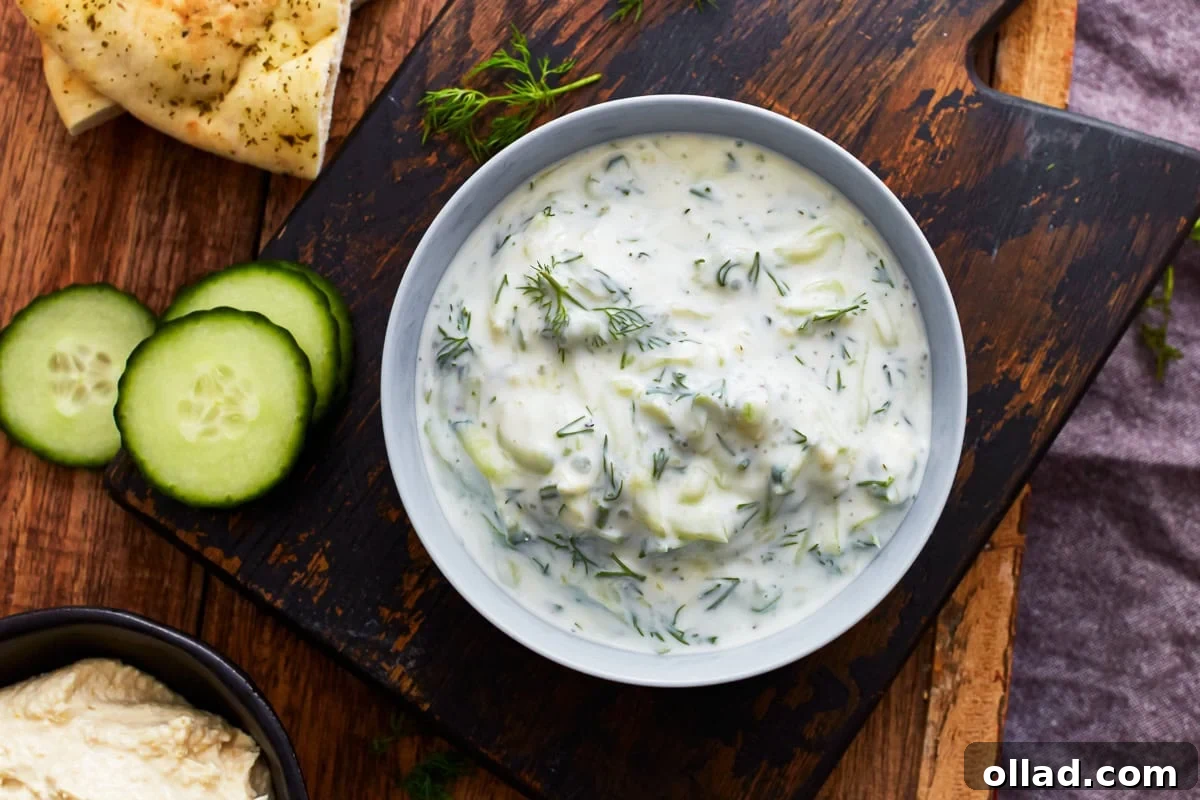
Elevate Every Meal: Serving Suggestions for Dairy-Free Tzatziki
The versatility of dairy-free tzatziki makes it a fantastic addition to countless meals. It’s not just a dip; it’s a dynamic condiment that can transform ordinary dishes into extraordinary culinary experiences. Here are some of my favorite ways to enjoy this refreshing sauce, including a recent obsession that I highly recommend:
Lately, I’ve been making vegan gyros on repeat, generously topped with this dairy-free tzatziki. The process is simple yet incredibly satisfying: I slice gluten-free falafels in half, arrange them on soft gluten-free flatbread, add a layer of crisp shredded lettuce and juicy sliced tomatoes, and then finish it all with a liberal drizzle of homemade tzatziki. The combination is absolutely divine!
-
Versatile Dips and Spreads
Tzatziki shines as a dip for a wide array of options. Pair it with fresh vegetable sticks like carrots, celery, bell peppers, and cucumber for a healthy snack. It’s also fantastic with gluten-free pita bread, sturdy crackers, or our fluffy gluten-free naan. As a spread, it’s a lighter, tangier alternative to mayonnaise or mustard in sandwiches and wraps, adding a burst of Mediterranean flavor to your lunchtime staples.
-
Refreshing Sauces and Dressings
Beyond being a dip, dairy-free tzatziki makes an excellent sauce or dressing. Spoon it over grilled meats (if not strictly vegan) or a vibrant array of roasted or grilled vegetables. It complements dishes like Greek quinoa salad beautifully, adding creaminess and depth, or can be served alongside rice pilaf. For a unique twist, try mixing it into a pasta salad for a refreshing and creamy dressing that’s far more exciting than traditional vinaigrettes.
Planning Ahead: Make-Ahead & Storage Guide
One of the fantastic aspects of this dairy-free tzatziki is that it can be prepared in advance, making it a perfect option for meal prep or entertaining. You can whip up a batch up to two days before you plan to serve it. This allows the flavors to meld and deepen, often resulting in an even more delicious dip.
However, keep in mind that as it sits, the cucumber may release additional liquid, and the garlic flavor tends to intensify over time. If you find some liquid separation upon serving, simply give it a good stir to reincorporate everything. To store your delicious sauce, transfer it to an airtight container and keep it refrigerated. A glass container with a secure lid works wonderfully, or you can tightly cover a bowl with plastic wrap. It will maintain its freshness and delightful flavor for up to 3 days, though its longevity can sometimes extend further depending on the initial freshness of your ingredients. Always stir well before serving to ensure a smooth, consistent texture and optimal flavor distribution.
Step-by-Step: How to Make Dairy-Free Tzatziki
Making this dairy-free tzatziki is incredibly straightforward, requiring just a few simple steps. Follow this guide to prepare a perfectly refreshing and flavorful dip every time.
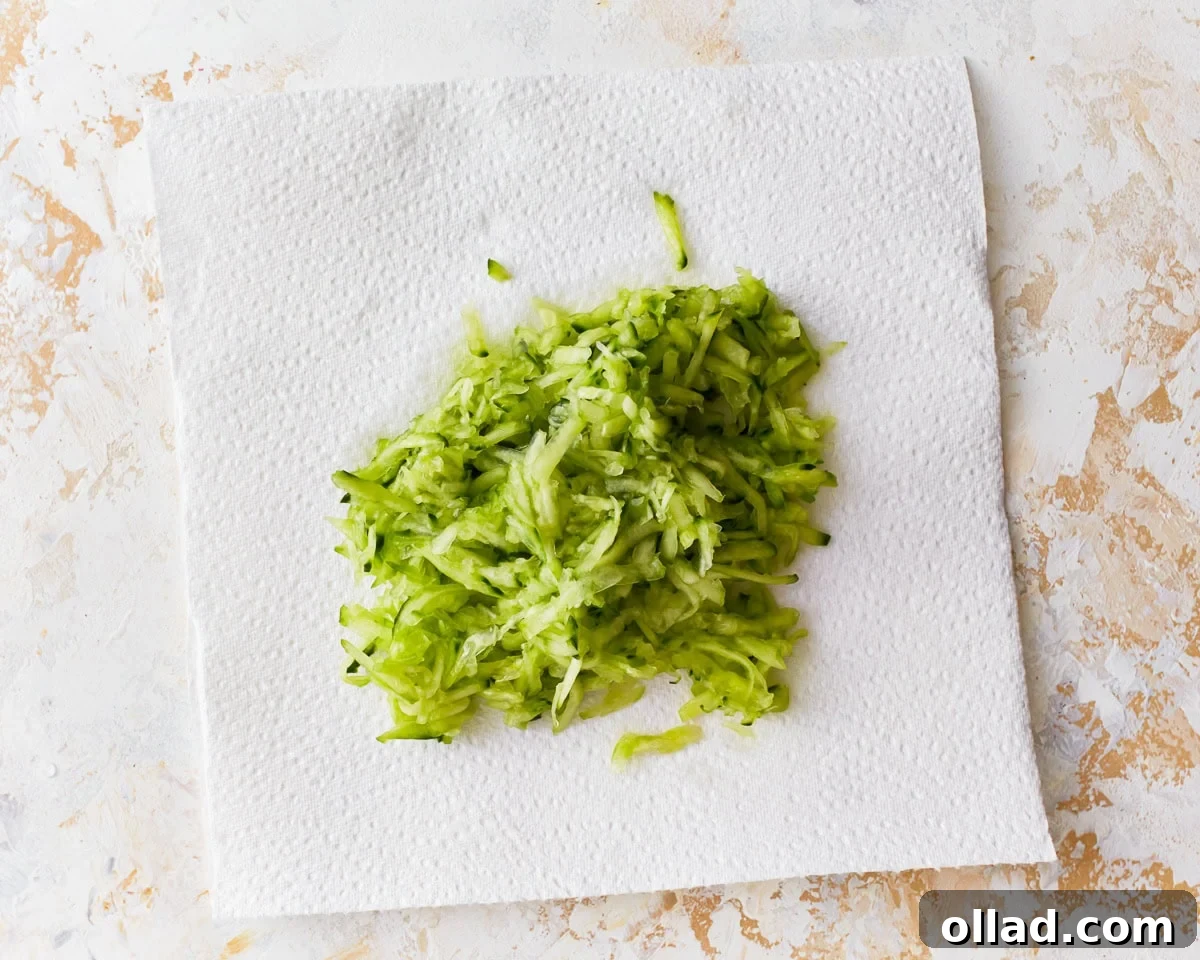
Begin by preparing your cucumber. Take approximately two-thirds of a large cucumber. For a visually appealing result and to retain some nutrients, peel about half of the cucumber lengthwise, leaving alternating strips of peel on the other half. Next, either grate the cucumber using a box grater or finely chop it into small pieces. Once prepared, it’s crucial to remove as much excess liquid as possible. Place the grated or chopped cucumber in a clean cheesecloth or several layers of sturdy paper towels and squeeze firmly to extract all the water. This step is essential for preventing your tzatziki from becoming watery.
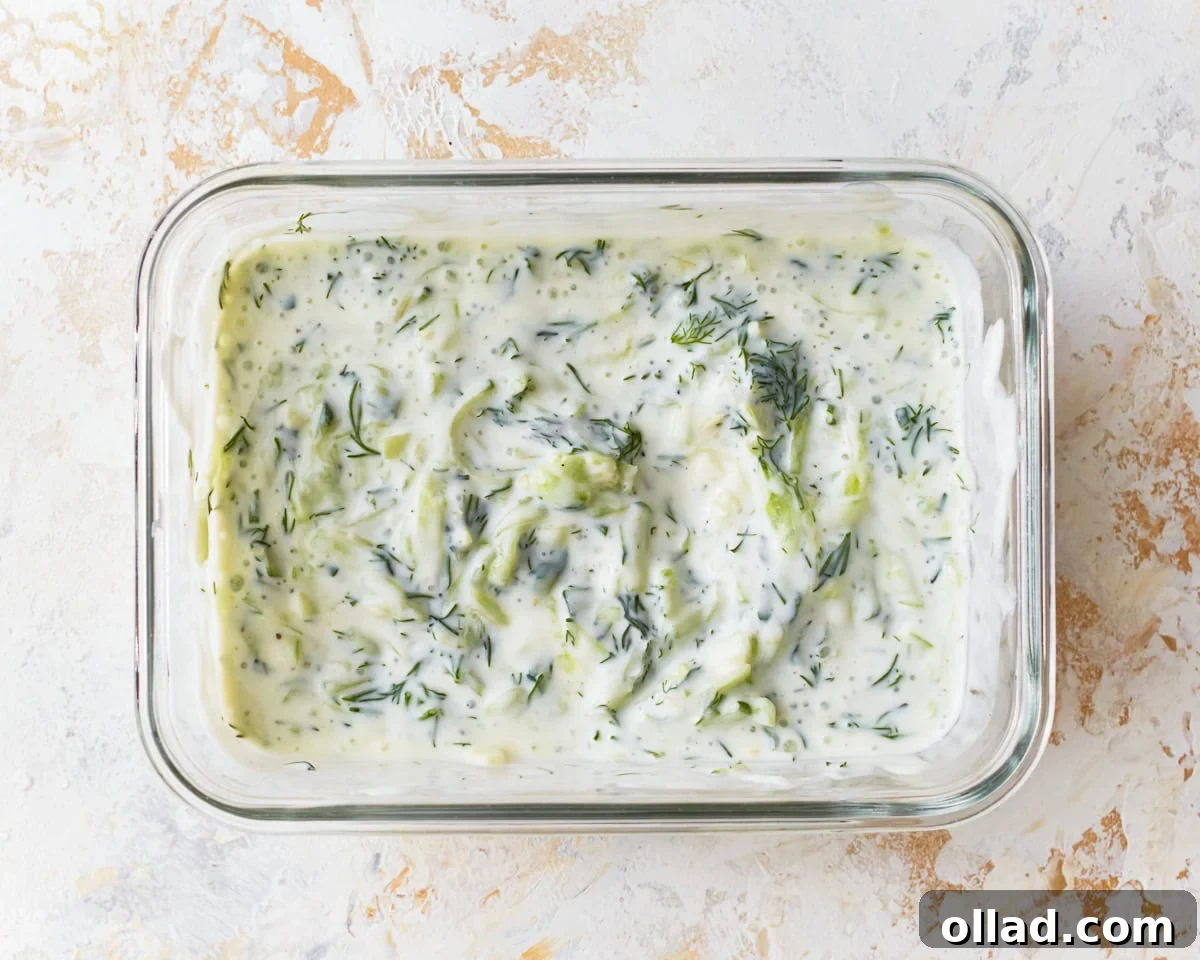
In a medium-sized mixing bowl, combine the thoroughly drained cucumber with the other key ingredients. Add 1 ½ cups of your preferred Greek-style vegan yogurt, 1 ½ tablespoons of fresh lemon juice, 2 cloves of finely minced garlic, ¼ cup of freshly chopped dill, ¼ teaspoon of sea salt, and a generous pinch of freshly ground black pepper. Stir all the ingredients together thoroughly until they are well combined and evenly distributed, ensuring all flavors are harmonized. Once mixed, cover the bowl tightly with plastic wrap and transfer it to the refrigerator. Allow the tzatziki to chill for a minimum of 30 minutes. This resting period is vital as it allows the flavors to meld and deepen, enhancing the overall taste and complexity of the dip. Serve your dairy-free tzatziki chilled and enjoy its refreshing taste!
The Dairy-Free Tzatziki Recipe Card
Dairy-Free Tzatziki
Sabine Venier
6 servings
10 mins
30 mins
40 mins
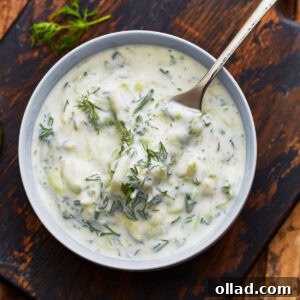
This dairy-free tzatziki recipe is just as delicious as the traditional version! It’s also naturally gluten-free, vegan, and low-carb.
Ingredients
- ⅔ of a large cucumber
- 1 ½ cups Greek style vegan yogurt
- 1 ½ tablespoons lemon juice
- 2 cloves garlic, minced
- ¼ cup fresh dill, finely chopped
- ¼ teaspoon sea salt
- pinch of freshly ground coarse black pepper
Instructions
-
Peel half of the cucumber lengthwise, leaving strips of peel on the other half. Grate or finely chop the cucumber, then squeeze out any remaining liquid from the cucumber.
-
In a medium bowl, combine the dried cucumber, vegan yogurt, lemon juice, garlic, dill, salt, and pepper. Mix well until all the ingredients are evenly distributed.
-
Cover the bowl with plastic wrap and refrigerate the tzatziki for at least 30 minutes to allow the flavors to meld. Serve chilled and enjoy.
Notes
- Use a thick Greek-style vegan yogurt for the best results. Don’t use one that has added flavors or sweeteners.
- Drain the cucumbers after grating to avoid a watery sauce.
- Fresh dill can be substituted for ½ a tablespoon of dried dill.
- This sauce can be made up to 2 days ahead of time.
- To Store: Keep refrigerated in an airtight container for up to 3 days. Stir well before serving.
- Mama says, “Check your labels!”
Nutrition
Calories: 38 kcal
Carbohydrates: 3 g
Protein: 5 g
Fat: 0.3 g
Saturated Fat: 0.1 g
Polyunsaturated Fat: 0.01 g
Monounsaturated Fat: 0.04 g
Trans Fat: 0.003 g
Cholesterol: 3 mg
Sodium: 117 mg
Potassium: 138 mg
Fiber: 0.3 g
Sugar: 2 g
Vitamin A: 178 IU
Vitamin C: 4 mg
Calcium: 66 mg
Iron: 0.3 mg
Nutrition information is automatically calculated, so should only be used as an approximation.
Additional Info
condiments
Mediterranean
Explore More Dairy-Free & Gluten-Free Delights
If you’ve enjoyed the refreshing flavors of this dairy-free tzatziki, we encourage you to explore more of our delicious gluten-free and dairy-free dip and sauce recipes. Each recipe is crafted to bring vibrant flavors to your table while accommodating dietary needs.
- Dairy-Free Ranch Dressing
- Gluten-Free Teriyaki Sauce
- Baked Buffalo Chicken Dip
- Balsamic Vinaigrette Salad Dressing
Frequently Asked Questions About Dairy-Free Tzatziki
Here are answers to some common questions about making and enjoying dairy-free tzatziki:
Can I use a different type of cucumber?
While English cucumbers are recommended for their thin skin and fewer seeds, you can use other varieties like Persian or regular slicing cucumbers. If using regular slicing cucumbers, you might want to peel them entirely and scoop out the seeds before grating, as they tend to be tougher and more watery.
What if my vegan yogurt isn’t thick enough?
If your vegan yogurt is on the thinner side, straining it through cheesecloth for a few hours (or overnight) in the refrigerator will significantly thicken it. This step helps remove excess liquid, resulting in a creamier, more authentic tzatziki texture.
How can I make my tzatziki spicier?
Traditional tzatziki is not spicy, but you can easily add a subtle kick. Incorporate a pinch of red pepper flakes into the mixture along with the other ingredients. Start with a small amount and taste before adding more to achieve your desired level of spice.
Can I freeze dairy-free tzatziki?
Freezing tzatziki is generally not recommended, especially due to the cucumber’s high water content and the yogurt base. Freezing and thawing can alter the texture significantly, making it watery and less appealing. It’s best enjoyed fresh or stored in the refrigerator for up to 3 days.