
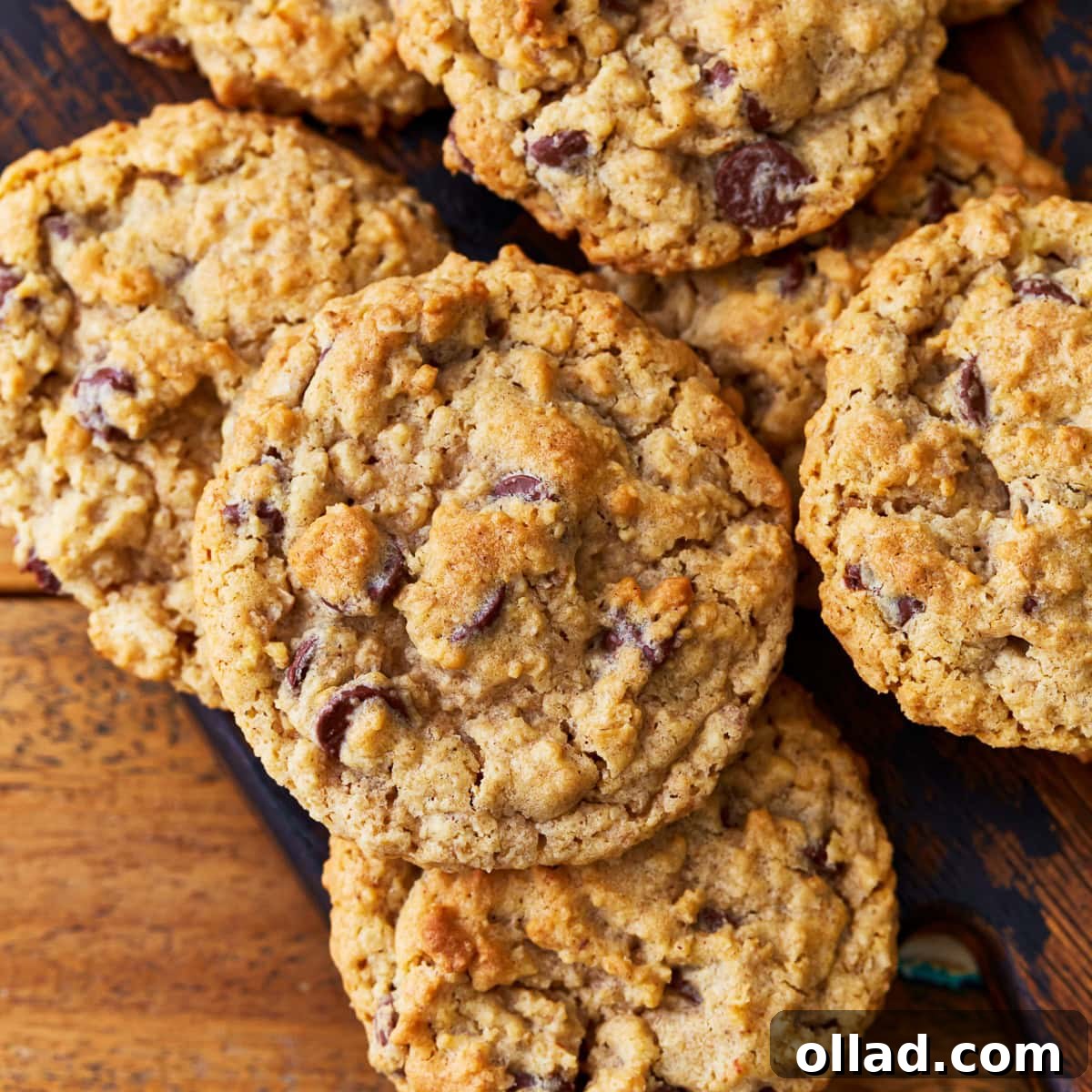
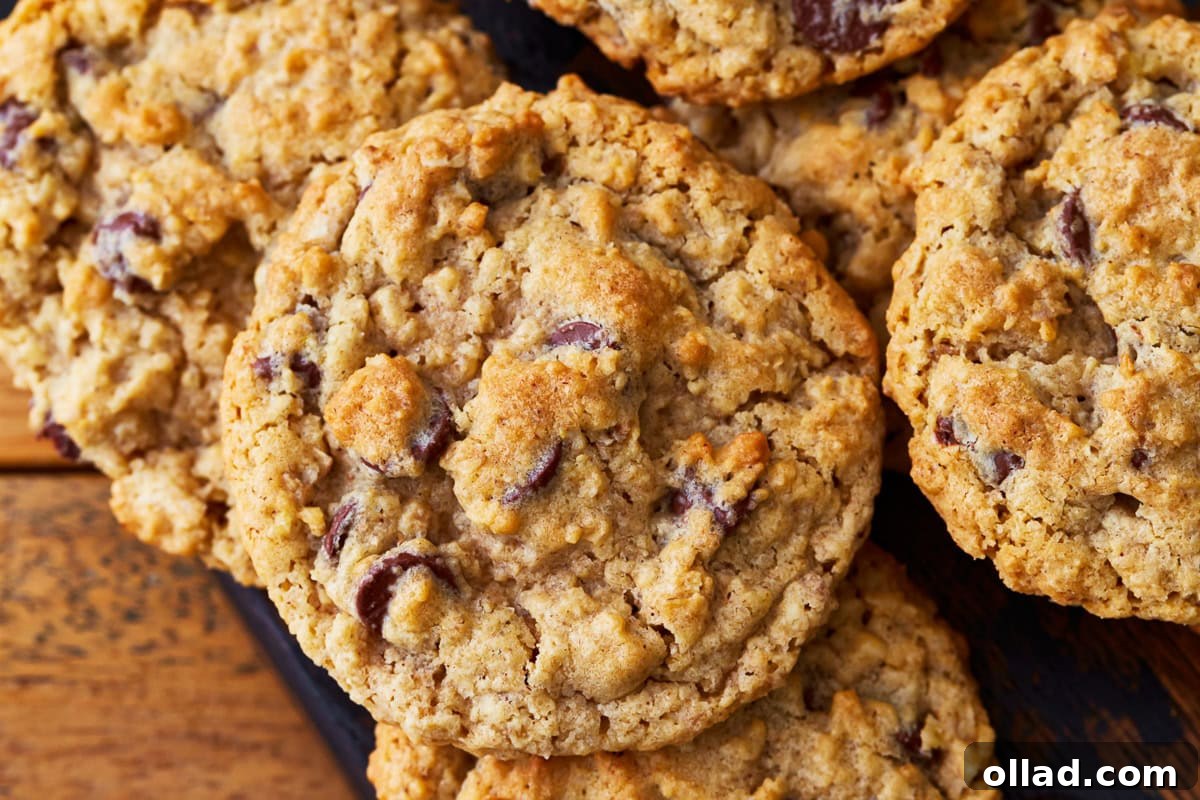
Welcome to the ultimate guide for crafting the most delectable gluten-free oatmeal cookies you’ll ever taste! These cookies aren’t just a treat; they’re a revelation, combining the perfect symphony of a soft, chewy interior with irresistibly crispy, delicate edges. Baked to golden perfection in just 20 minutes from start to finish, these homemade delights are a game-changer for anyone seeking a wholesome, satisfying snack or dessert.
Whether you’re managing a gluten sensitivity, living with celiac disease, or simply exploring healthier baking options, this recipe promises to deliver on flavor, texture, and ease. We’ll dive deep into the secrets behind achieving that ideal balance of sweetness and warmth, ensuring every bite is pure bliss. We love them with a classic combination of chocolate chips and plump raisins, but the beauty of this recipe lies in its versatility. Feel free to customize them with your favorite mix-ins to create a batch that’s uniquely yours.
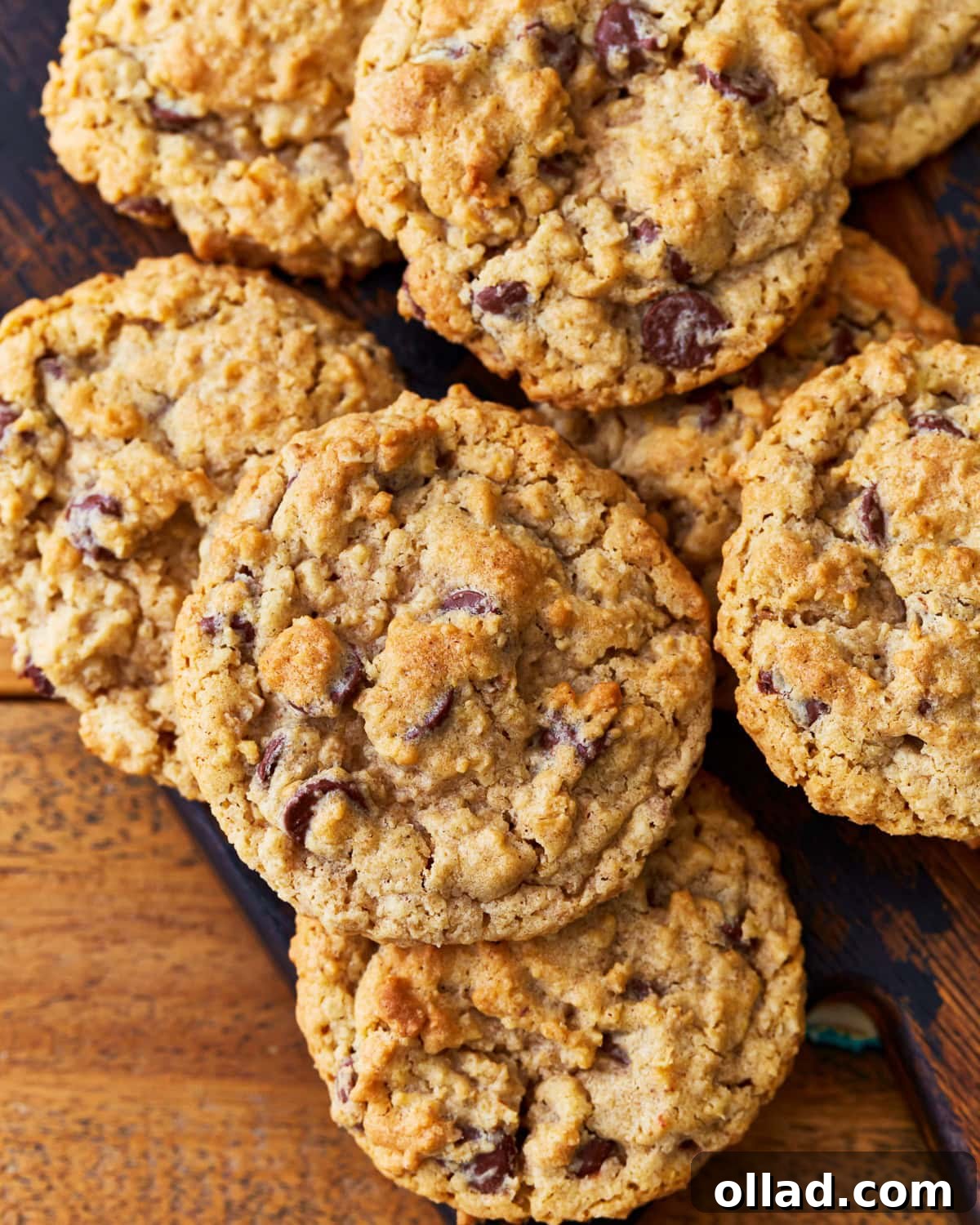
The Ultimate Gluten-Free Oatmeal Cookies Recipe
There’s something truly comforting about a warm oatmeal cookie, and this recipe elevates that comfort to a new level for those on a gluten-free diet. My family absolutely adores these thick, chewy, and flavorful cookies, making them a staple in our home. My husband is a firm believer in the classic raisin pairing, while my kids invariably champion the chocolate chip camp. To satisfy everyone’s cravings, I often bake two separate batches – one with luscious chocolate chips and another with juicy raisins. The best part? They stay wonderfully fresh for days in an airtight container, so you never have to worry about having “too many” delicious cookies around.
What makes these cookies so special isn’t just their incredible taste and texture, but also the ease with which they come together. Using readily available pantry staples, you can whip up a batch of these bakery-quality cookies without any fuss. Say goodbye to dry, crumbly gluten-free baked goods and hello to a cookie that’s so good, you’d never guess it’s gluten-free!
Crafting Perfection: Essential Ingredients for Gluten-Free Oatmeal Cookies
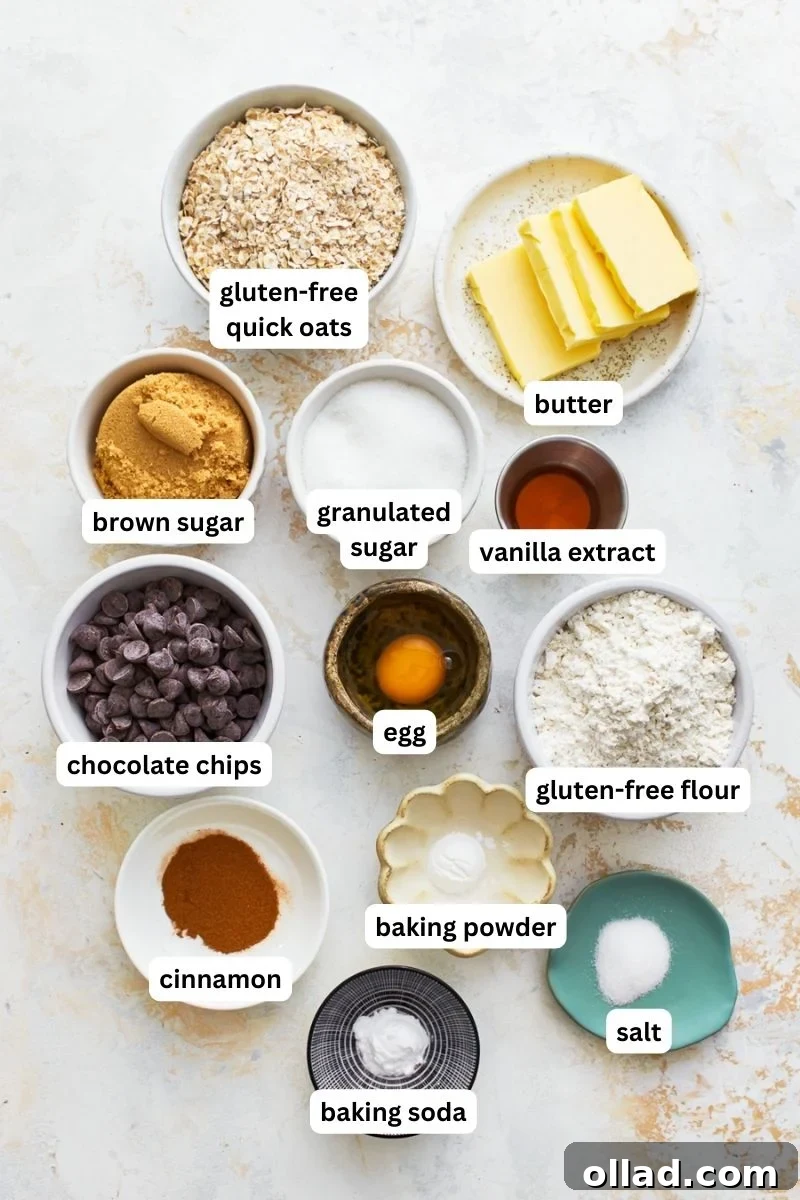
Every great cookie starts with quality ingredients, and these gluten-free oatmeal cookies are no exception. Each component plays a vital role in achieving their signature soft, chewy texture and delightful flavor. Here’s a closer look at what you’ll need and why each element is crucial:
- Unsalted Butter: The foundation of rich, tender cookies. Using unsalted butter gives you control over the overall saltiness of the final product. Remember to let it soften at room temperature for about 10-15 minutes before baking for optimal creaminess. For those needing a dairy-free alternative, a high-quality plant-based butter substitute like Smart Balance works beautifully, ensuring no compromise on flavor or texture.
- Sugar – A Dynamic Duo: Our recipe calls for a balanced blend of both granulated white sugar and brown sugar. Granulated sugar provides crispness and sweetness, while brown sugar, with its molasses content, contributes moisture, chewiness, and a deeper, more complex caramel note that perfectly complements the oats and cinnamon.
- Pure Vanilla Extract: A simple yet powerful flavor enhancer. Pure vanilla extract adds warmth and depth, rounding out the sweetness and bringing all the flavors together in harmony. Don’t skimp on good quality vanilla – it truly makes a difference.
- Egg: This essential binding agent provides structure to the cookies, helping them hold their shape and preventing them from crumbling. It also adds a touch of richness and aids in achieving that lovely chewy texture.
- Gluten-Free All-Purpose Flour with Xanthan Gum: The cornerstone of our gluten-free baking. It’s crucial to select a reputable gluten-free all-purpose flour blend that already contains xanthan gum. Xanthan gum acts as a binder, mimicking the elasticity that gluten provides in traditional flour, preventing your cookies from being dry or falling apart. Brands like Pillsbury gluten-free flour are often reliable. Be aware that not all gluten-free flours are created equal, and results can vary depending on the blend.
- Leavening Agents – Baking Soda and Baking Powder: These two work in tandem to give our cookies the perfect rise and a tender crumb. Baking soda reacts with the acidic brown sugar to create spread and softness, while baking powder contributes to the lift, ensuring a light and airy interior that’s still wonderfully chewy.
- Salt: Far from just adding saltiness, a touch of salt is vital for enhancing the overall flavor profile of the cookies. It balances the sweetness, making the other ingredients sing and preventing the cookies from tasting one-dimensional.
- Ground Cinnamon: This warm spice is the perfect companion to oats, infusing the cookies with a comforting, aromatic quality that is synonymous with classic oatmeal cookies. It adds a subtle yet significant layer of flavor.
- Gluten-Free Quick Oats: The star of the show! Quick oats are preferred for this recipe as they provide excellent structure and a delightful chew without being too bulky. If you only have gluten-free old-fashioned oats on hand, you can certainly use them, but consider giving them a quick chop in a food processor to prevent them from making the cookies too dense. Always ensure your oats are certified gluten-free to avoid cross-contamination.
- Your Favorite Mix-Ins: This is where the customization comes in! Classic choices like chocolate chips (mini or regular) and raisins are always a hit. For a dairy-free option, Enjoy Life Mini Chocolate Chips are a fantastic choice. But don’t stop there – consider chopped nuts (walnuts, pecans), dried cranberries, shredded coconut, or even a sprinkle of sea salt for a gourmet touch.
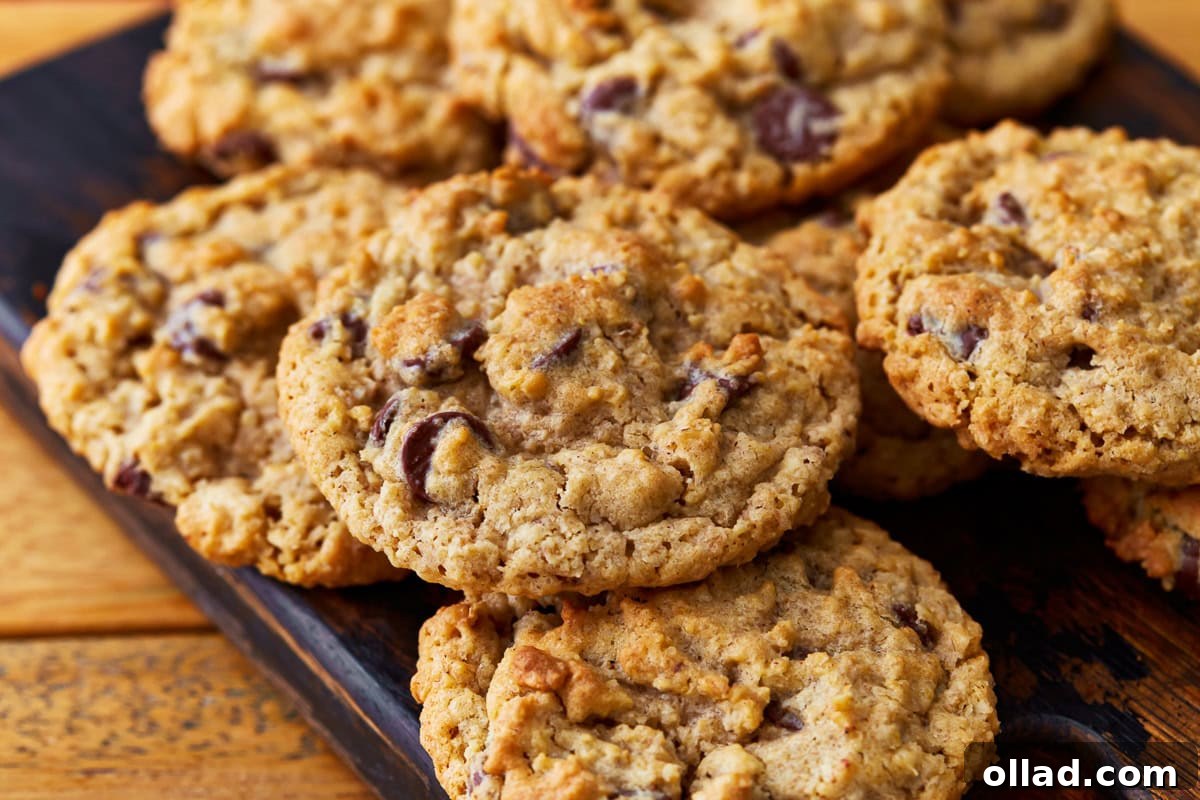
Mastering the Art: Tips and Suggestions for Perfect Cookies
Even the simplest recipes benefit from a few expert tips. Follow these suggestions to ensure your gluten-free oatmeal cookies turn out perfectly every time, from soft and chewy to delightfully crisp:
- Soften Your Butter, Don’t Melt It: This seemingly small detail makes a huge difference. Take your unsalted butter out of the refrigerator 10-15 minutes before you begin baking. Softened butter creams beautifully with the sugars, creating an airy base that leads to light and tender cookies. Melted butter will result in greasy, flat cookies.
- Measure Gluten-Free Flour Precisely: Accuracy is paramount when baking, especially with gluten-free flours. Do not scoop the flour directly from the bag with your measuring cup. Instead, use the “spoon and level” method: spoon the flour into your dry measuring cup until it’s overflowing, then use a straight edge (like the back of a knife) to level off the excess. This prevents compacting the flour and ensures you use the correct amount, avoiding dry, dense cookies.
- Embrace the Cookie Scoop: A greased cookie scoop is a true game-changer for uniform cookies. I highly recommend a 1 1/2 tablespoon cookie scoop. It ensures that each cookie is the same size, which leads to even baking and a consistent final product. Plus, it makes the process much faster and cleaner!
- Parchment Paper is Your Friend: Lining your baking sheets with parchment paper prevents sticking and promotes even browning, making cleanup a breeze. For added convenience, I love using Reynolds Kitchens Cookie Baking Sheets, which often come with a smart grid that helps you perfectly space out your cookies for optimal airflow and prevent them from merging into one giant cookie. You can find these at most major retailers like Walmart.
- Avoid Overmixing: Once you add the dry ingredients to the wet, mix only until just combined. Overmixing can develop the gluten in wheat-based flours (though less of an issue with GF flours, it can still lead to tougher cookies) and incorporate too much air, which can affect the final texture.
- Don’t Overbake: Keep a close eye on your cookies. They should be just starting to turn golden brown around the edges when ready. The centers might still look slightly soft, but they will set as they cool. Overbaking is the quickest way to end up with hard, dry cookies.
Demystifying Oats: Are They Truly Gluten-Free?
This is a common and important question for anyone on a gluten-free diet. The simple answer is: oats are naturally gluten-free. However, the journey of oats from farm to package often involves significant risk of cross-contamination, which is why choosing the right kind of oats is absolutely critical.
The primary concern stems from how most oats are processed. They are typically grown, harvested, and processed in facilities that also handle gluten-containing grains like wheat, barley, and rye. This proximity means that during various stages – from planting in fields where wheat has been grown, to transportation, and milling – oats can come into contact with gluten, rendering them unsafe for individuals with celiac disease or severe gluten sensitivity.
To ensure safety, it is always recommended to use oats that are specifically labeled as “certified gluten-free.” These oats undergo strict testing protocols to ensure their gluten content remains below the internationally recognized threshold of 20 parts per million (ppm), which is considered safe for most individuals with celiac disease.
Even better, some brands go a step further and offer “purity protocol oats.” These oats are not only tested for gluten levels but are also grown, harvested, and processed in dedicated gluten-free fields and facilities from start to finish. This minimizes the risk of cross-contamination even further, providing an extra layer of assurance for those with the most sensitive dietary needs.
Always check the labels carefully and look for trusted certifications to ensure the oats you choose are truly safe for your gluten-free baking. Using certified gluten-free quick oats in this recipe ensures that everyone can enjoy these delicious cookies without worry.
Common Cookie Conundrums: Troubleshooting and FAQs
Why Are My Oatmeal Cookies Hard?
There are a couple of common culprits if your oatmeal cookies turn out hard rather than soft and chewy. The most frequent reason is simply overbaking. Cookies continue to cook slightly even after they’re removed from the oven due to residual heat. If they look perfectly golden and set in the oven, they might be overdone by the time they cool. Next time, try reducing the bake time by 1-2 minutes. Look for edges that are just barely golden and centers that still appear slightly soft. Another factor could be too little moisture in the dough, often from incorrect flour measurement. Always spoon and level your gluten-free flour to ensure accuracy.
Can I Freeze The Cookie Dough?
Absolutely! Freezing cookie dough is a fantastic way to prepare ahead and always have freshly baked cookies on hand. The best method for freezing this oatmeal cookie dough is to scoop the dough into individual balls, just as you would for baking. Place these dough balls onto a parchment-lined baking sheet and flash-freeze them for about 10-15 minutes, or until they are firm but not completely solid. This flash-freezing step prevents them from sticking together. Once firm, transfer the cookie dough balls to a freezer-safe airtight container or a heavy-duty freezer bag. Label with the date. Frozen raw cookie dough can maintain its quality for an impressive 9 to 12 months in the freezer. When you’re ready to bake, you can often bake them directly from frozen, adding a couple of extra minutes to the bake time.
Storage Instructions for Optimal Freshness
To keep your homemade gluten-free oatmeal cookies tasting their best, proper storage is key. Once cooled completely, store any leftover cookies in an airtight container at room temperature. They will remain wonderfully fresh and delicious for up to 1 week. For longer-term storage, these cookies freeze beautifully! Place cooled cookies in a single layer on a lined baking sheet and freeze until solid (about 1-2 hours). Then, transfer them to an airtight freezer-safe container or a Ziplock bag. They can be stored in the freezer for up to 1 month. When ready to enjoy, simply thaw them at room temperature or gently warm them for a few minutes in a low oven.
Explore More Gluten-Free Cookie Recipes!
If you’ve fallen in love with these gluten-free oatmeal cookies, you’ll be thrilled to discover our extensive collection of other delightful gluten-free cookie recipes. From classic chocolate chip to festive gingerbread, there’s a cookie for every craving and occasion:
- Gluten-Free Chocolate Chip Cookies
- Gluten-Free Gingerbread Cookies
- Gluten-Free Monster Cookies
- Gluten-Free Snickerdoodles
- Banana Oatmeal Cookies
- …Browse all our gluten-free cookie recipes!
Gluten-Free Oatmeal Cookies
Audrey Roberts
24
cookies
10
mins
10
mins
20
mins
Share by Email
Print Recipe

Ingredients
- ½ cup unsalted butter, softened
- ½ cup granulated sugar
- ½ cup brown sugar, packed
- 1 teaspoon pure vanilla extract
- 1 large egg
- 1 cup gluten-free all-purpose flour with xanthan gum
- ½ teaspoon baking soda
- ½ teaspoon baking powder
- ½ teaspoon salt
- ½ teaspoon ground cinnamon
- 1½ cups gluten-free quick oats
- 1 cup chocolate chips or raisins
Instructions
- Preheat oven to 375°F (190°C). Line two baking sheets with parchment paper.
- In a large bowl, beat together softened butter, granulated sugar, and brown sugar on medium speed until smooth and creamy.
- Add vanilla extract and egg, mixing until fully combined and smooth.
- In a separate bowl, whisk together the gluten-free all-purpose flour, baking soda, baking powder, salt, and ground cinnamon.
- Gradually add the dry ingredient mixture to the wet ingredients, mixing on low speed until just combined. Stir in the gluten-free quick oats.
- Gently fold in your chosen mix-ins (chocolate chips or raisins) until evenly distributed throughout the dough.
- Using a greased 1½-tablespoon cookie scoop, drop spoonfuls of dough onto the prepared baking sheets, spacing them about 2 inches apart.
- Bake for 10–12 minutes, or until the edges of the cookies are golden brown and the centers are just set.
- Allow cookies to cool on the baking sheets for 2–3 minutes before carefully transferring them to a wire rack to cool completely.
Notes
- Soften your butter by leaving it on the counter for 10-15 minutes before baking.
- Measure gluten-free flour correctly using the spoon and level method (spoon flour into a dry measuring cup, then level with a straight edge).
- For consistent cookie size and even baking, always use a greased 1 1/2 tablespoon cookie scoop.
- Using Reynolds Kitchens Cookie Baking Sheets with their smart grid helps perfectly space cookies.
- To store: Place cooled cookies in an airtight container at room temperature for up to 1 week.
- To freeze baked cookies: Place in a single layer on a lined baking sheet and freeze until solid (1-2 hours). Transfer to an airtight container or Ziplock bag for up to 1 month.
- Mama says, “Always check all your labels to ensure they are gluten-free, especially for oats and mix-ins.”
Nutrition
Calories: 124kcal
Carbohydrates: 21g
Protein: 2g
Fat: 5g
Saturated Fat: 3g
Cholesterol: 17mg
Sodium: 159mg
Potassium: 85mg
Fiber: 1g
Sugar: 9g
Vitamin A: 128IU
Vitamin C: 1mg
Calcium: 17mg
Iron: 1mg
Nutrition information is automatically calculated, so should only be used as an approximation.
Additional Info
Dessert
American
How To Make Gluten-Free Oatmeal Cookies: A Step-by-Step Visual Guide
Follow these easy steps, complete with visual cues, to bake your perfect batch of gluten-free oatmeal cookies.
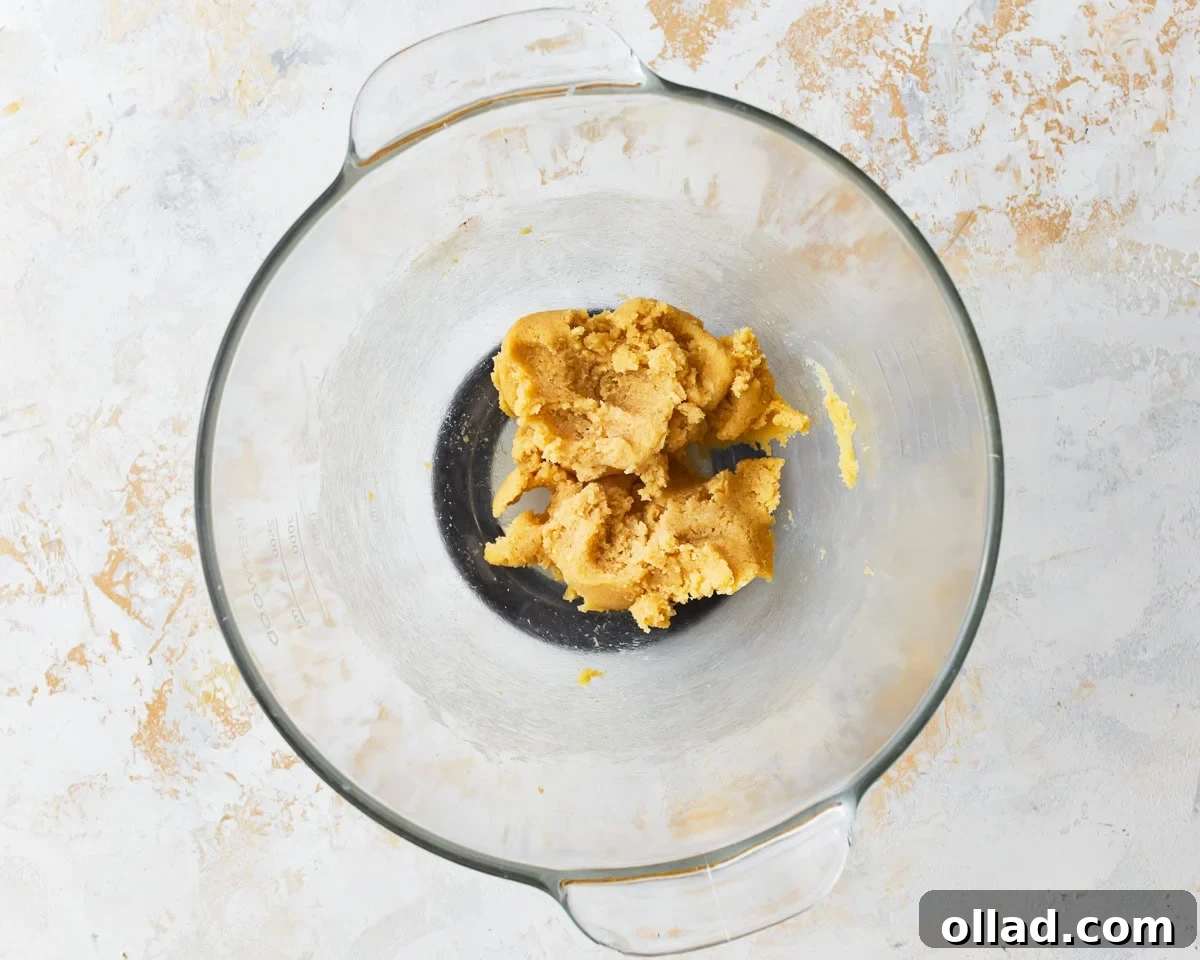
Step 1: Prepare Your Workspace. Begin by preheating your oven to 375°F (190°C). Then, line two baking sheets with parchment paper; this will prevent sticking and aid in even baking. In a spacious mixing bowl, combine the softened ½ cup of unsalted butter with ½ cup of granulated sugar and ½ cup of packed brown sugar. Beat these ingredients together on medium speed until the mixture becomes light, fluffy, and smooth, ensuring all sugars are well incorporated.
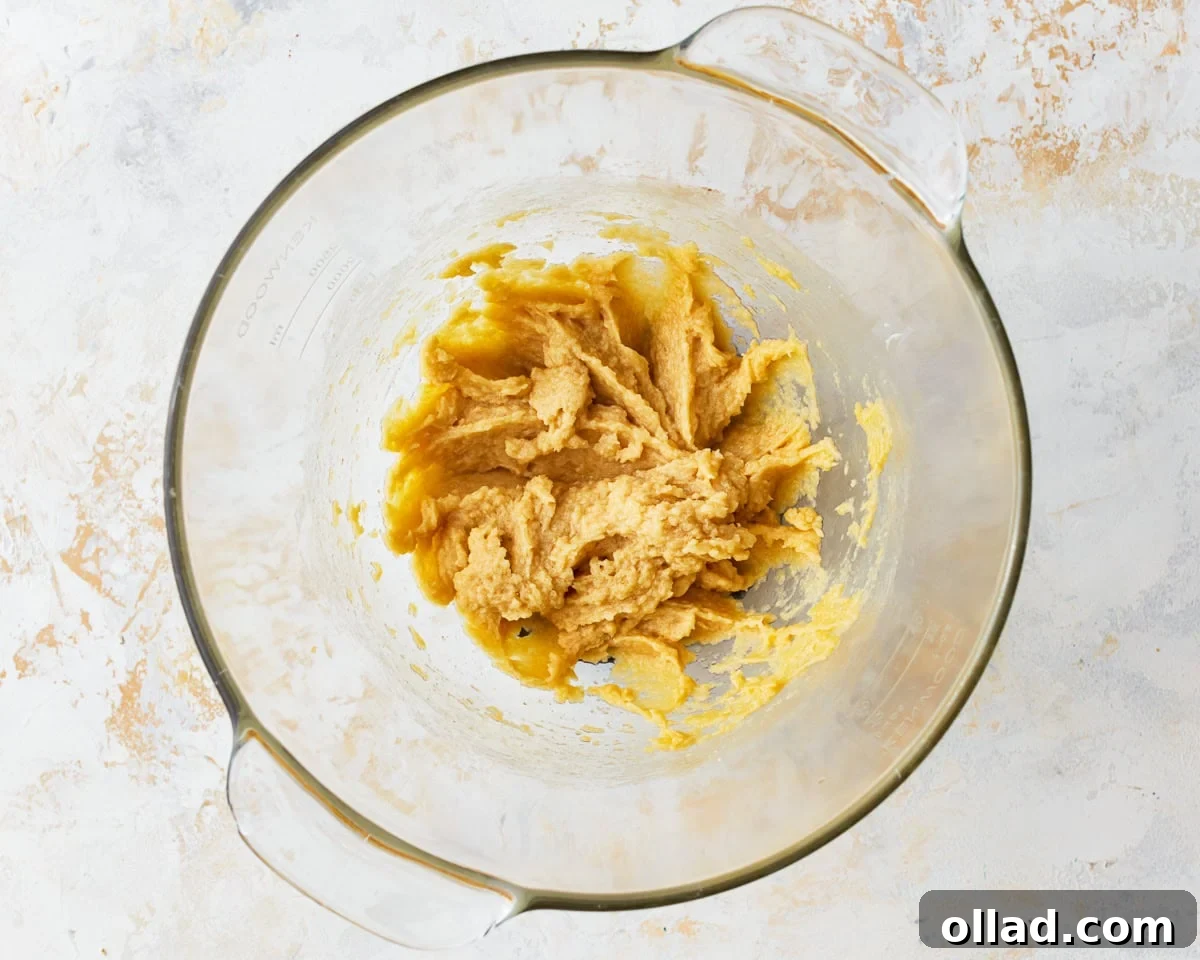
Step 2: Incorporate Wet Ingredients. To the creamed butter and sugar mixture, add 1 teaspoon of pure vanilla extract and 1 large egg. Continue to mix until these wet ingredients are fully combined into the batter, creating a uniform and smooth consistency. Scrape down the sides of the bowl as needed to ensure everything is well mixed.
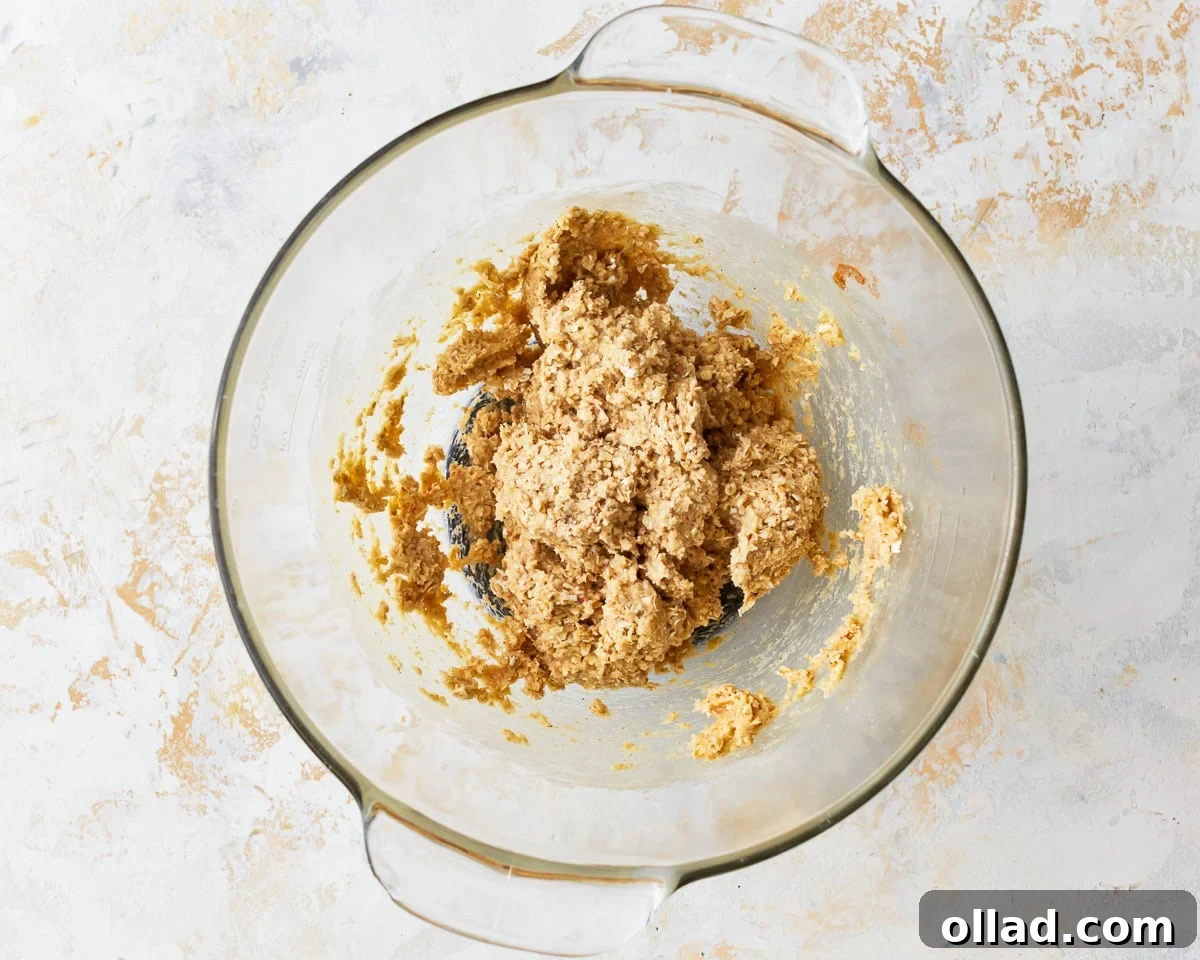
Step 3: Add Dry Ingredients. In a separate bowl (or directly to the wet ingredients if your bowl is large enough and you prefer to minimize dishes), add 1 cup of gluten-free all-purpose flour (with xanthan gum), ½ teaspoon of baking soda, ½ teaspoon of baking powder, ½ teaspoon of salt, and ½ teaspoon of ground cinnamon. Whisk these dry ingredients together before adding them to the wet mixture. Mix until everything is just combined and no streaks of dry flour remain. Be careful not to overmix at this stage.
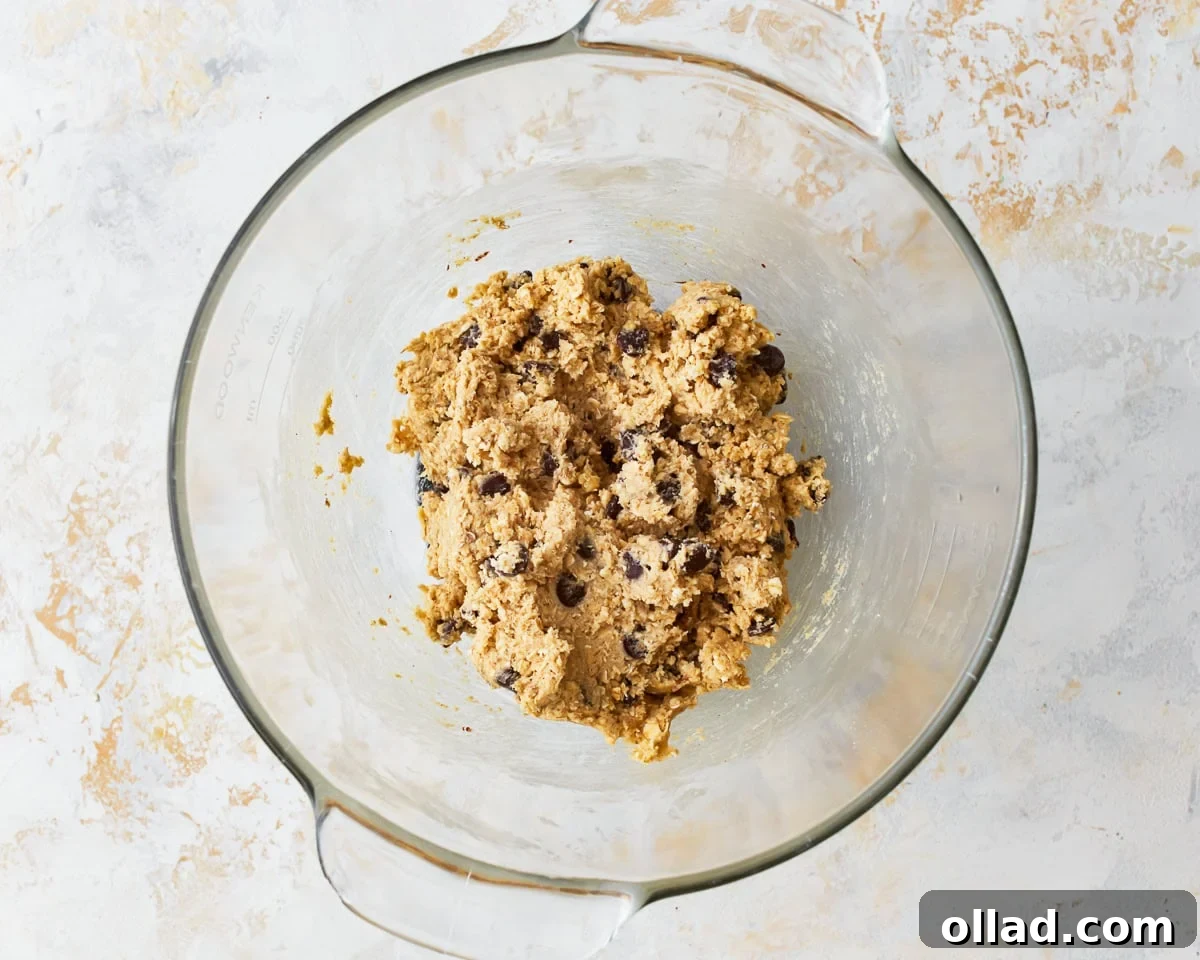
Step 4: Fold in Mix-Ins. Finally, it’s time for the delicious additions! Gently fold in 1½ cups of gluten-free quick oats and 1 cup of your chosen mix-ins, whether they are chocolate chips, raisins, or a combination of both. Mix until they are evenly distributed throughout the cookie dough, but again, avoid overmixing to maintain a tender texture.
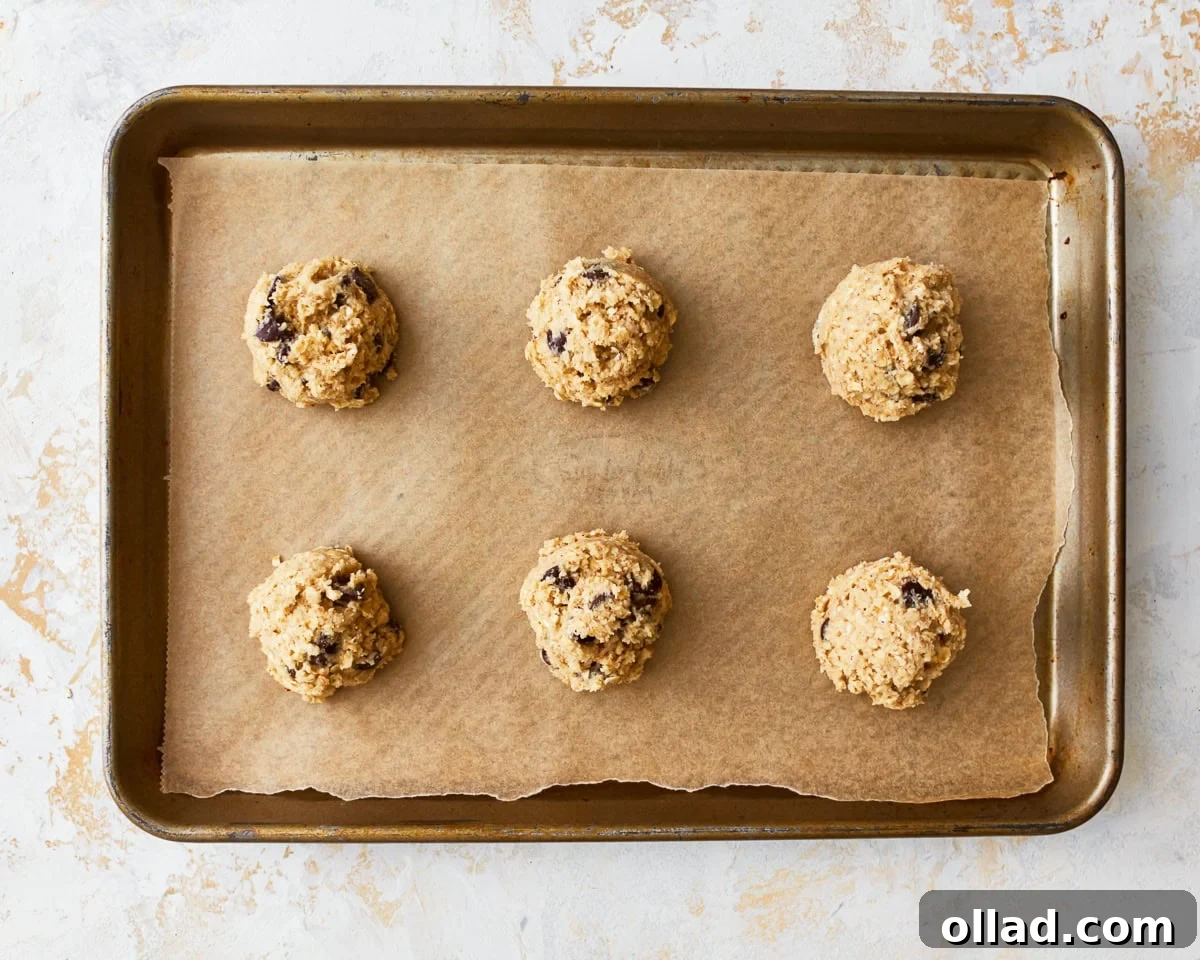
Step 5: Scoop and Bake. Using a greased 1½-tablespoon cookie scoop, portion out the dough and place the cookie balls onto your parchment-lined baking sheets, ensuring they are spaced about 2 inches apart to allow for spread. Bake in the preheated oven for 10–12 minutes. The cookies are ready when their edges turn a beautiful golden brown and the centers appear just set. Don’t worry if they look slightly soft in the middle; they will firm up as they cool. Remove from the oven and allow the cookies to cool on the baking sheet for 2–3 minutes before transferring them to a wire rack to cool completely. Enjoy your perfect gluten-free oatmeal cookies!